

“Well, Isn’t That Nice?” — A Story About Perspective, Pride, and Quiet Wisdom
The two women met the way old friends often do — over warm cups of tea at a quiet café, sunlight spilling through the window and the comforting hum of everyday life around them. They hadn’t seen each other in years, and there was that familiar mixture of nostalgia and curiosity that comes when people who once shared a chapter of life meet again.
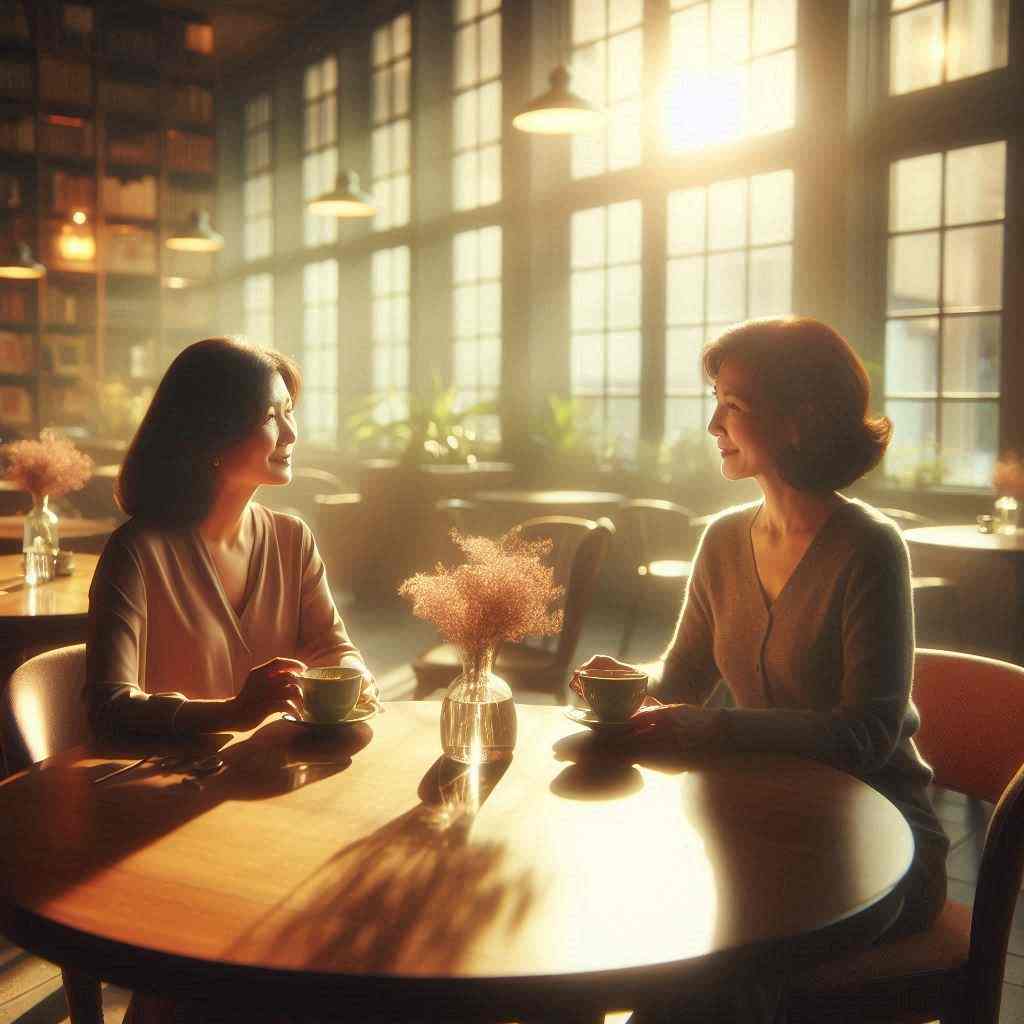
One of the women, impeccably dressed and clearly proud of her accomplishments, wasted no time setting the tone.
“When my first child was born,” she said, leaning back slightly, “my husband built me this beautiful mansion.”
She gestured vaguely, as if the walls themselves might hear and confirm her story.
The second woman smiled politely, lifted her teacup, and said calmly,
“Well, isn’t that nice?”
Encouraged, the first woman continued.
“When my second child was born, he bought me that fine Cadillac you see parked outside.”
Again, the second woman nodded gently.
“Well, isn’t that nice?”
By now, the first woman’s voice carried a note of triumph.
“And when my third child was born,” she added with a satisfied smile, “he gave me this dazzling diamond bracelet.”
She extended her wrist slightly, letting the stones catch the light.
The second woman, unbothered and serene, smiled once more.
“Well, isn’t that nice?”
There was a brief pause. The first woman frowned just slightly. Something about the repeated response unsettled her. No envy. No admiration. No competition. Just the same gentle phrase, again and again.

Finally, curiosity got the better of her.
“So,” she asked, lowering her voice, “what happened to your children?”
The second woman sighed softly, as if opening a well-worn memory.
“Oh, my poor son,” she said. “His marriage is… unfortunate.”
The first woman leaned forward. “Oh? What happened?”
“Well,” the second woman continued, “he married a woman who doesn’t lift a finger around the house. She spends most of her day in bed — sleeping, reading, relaxing.”
She shook her head slowly.
“And can you believe it? My son brings her breakfast in bed every single morning.”
The first woman gasped. “That’s terrible!”
“And your daughter?” she asked quickly.
The second woman’s face brightened instantly.
“Oh, my daughter?” she said warmly. “She’s incredibly fortunate.”
“Really?”
“Yes,” she replied. “She married an absolute angel. He insists she never does any housework. Every morning, he brings her breakfast in bed, lets her sleep as long as she wants, and tells her to relax all day.”
She smiled contentedly.
“Isn’t that wonderful?”
The first woman blinked.
The café seemed quieter somehow, as if the moment itself had paused to let the truth settle.
Same situation.
Different interpretation.
Entirely different story.
And that’s where the real lesson begins.
The Stories We Tell Ourselves
Life rarely hands us situations that are completely good or completely bad. More often, it gives us moments that are neutral — shaped not by facts alone, but by the stories we choose to tell about them.
The first woman believed success looked like grand gestures: mansions, luxury cars, expensive jewelry. She measured love in visible rewards and public proof. To her, pride was something displayed.
The second woman, however, measured life differently. She understood that the same behavior could be viewed through two completely opposite lenses. What looked like “failure” in one child became “good fortune” in another — simply because love, to her, wasn’t about appearances. It was about care, intention, and choice.

She wasn’t blind to reality. She just refused to let bitterness narrate it.
Why Perspective Matters More Than Circumstance
How many times do we look at someone else’s life and assume we know the whole story?
We see a stay-at-home parent and assume laziness.
We see someone resting and assume entitlement.
We see someone struggling and assume weakness.
But perspective changes everything.
The second woman understood something many people don’t realize until much later in life:
The same behavior can feel like neglect or devotion — depending on whether love is present.
Her son wasn’t being taken advantage of; he was choosing to give.
Her daughter wasn’t spoiled; she was supported.
The difference wasn’t gender.
It wasn’t fairness.
It wasn’t tradition.
It was intention.
The Quiet Strength of Letting Go of Comparison
The first woman needed validation. Each achievement she shared was a way of measuring herself against others. The second woman didn’t compete — she observed.
And that quiet confidence?
That’s where wisdom lives.
When we stop comparing our lives to others, something powerful happens. We start listening instead of performing. We start understanding instead of judging. We start seeing people for who they are, not what they have.

The second woman wasn’t impressed by material success because she knew something deeper: peace doesn’t come from accumulation; it comes from acceptance.
Family Isn’t a Scorecard
The most profound part of the story isn’t the punchline — it’s the compassion behind it.
The second woman loved both her children equally. She didn’t shame one to praise the other. She simply recognized that happiness looks different in different lives.
She didn’t ask, “Who has more?”
She asked, “Who is cared for?”
That’s the kind of thinking that keeps families together instead of tearing them apart with resentment, expectations, and comparison.
A Lesson for All of Us
We live in a world that constantly tells us to measure, compare, rank, and prove. But this story gently reminds us:
- What looks like failure may actually be freedom
- What looks like indulgence may actually be love
- What looks like weakness may actually be generosity
And sometimes, the wisest response isn’t an argument or explanation — it’s a calm smile and the words:
“Well, isn’t that nice?”

Because when you’re secure in your values, you don’t need to convince anyone else.
Final Thought
This isn’t just a humorous story. It’s a mirror.
It asks us:
- How do we measure success?
- How do we judge others’ lives?
- And how often do we confuse love with appearance?
The next time you feel tempted to compare your journey to someone else’s, remember this:
Two people can live the same reality — and experience completely different happiness.
Perspective isn’t just how we see the world.
It’s how we survive it with grace.
And sometimes, the most powerful wisdom comes wrapped in a smile and a simple phrase:
“Well, isn’t that nice?”
0 Comments