

The Day I Gave Away My Jacket—and Lost Everything
That morning, Fifth Avenue looked like it had been scrubbed raw by winter.
The sky was the color of dirty pearl, flat and heavy, and the wind slid between the buildings like it knew exactly where your skin was exposed. It found the gap at my collar. It slipped under the hem of my jacket. It made my eyes water before I even reached the revolving doors of our office building.

I told myself I should have worn thicker socks.
I told myself I’d order a better coat when my bonus came through.
I told myself a lot of small, practical things—the kind you repeat when you’re trying to pretend you’re not already exhausted.
The Woman Against the Wall
Just outside the glass doors, to the right where the marble wall met the concrete, a woman sat with her back pressed hard against the stone.
As if the building might lend her a little of its stored warmth.
As if leaning into something solid could keep the cold from pushing her out of the world.

She wore a thin sweater that looked like it had been washed too many times. No coat. No gloves. Her hands were tucked beneath her arms, but they still shook—a faint tremor that made me flinch when I noticed it.
The sidewalk around her was damp and gray, speckled with grit. People stepped around her the way water parts around a rock. Smooth, practiced detours. No eye contact. No hesitation.
I’d seen her before.
Or maybe I’d seen someone like her.
In a city like this, those stories blur together if you let them.
The Automatic Response
I tightened my scarf, dug into my pockets, and kept walking, already preparing the polite face I wore for moments like this.
A nod.
A dollar.
A quick, guilty smile.
My fingers hit lint.
A receipt.
A gum wrapper.
Nothing.
“Spare some change?” she asked.
Her voice wasn’t sharp. It wasn’t dramatic. It was worn down to something quiet, like she wasn’t asking for a miracle—just checking whether kindness still existed at all.
“I’m sorry,” I said automatically, already stepping toward the doors.
But I didn’t go in.
The Moment That Stopped Me
Something held me there, mid-step, like a hand at the back of my coat.
I turned slightly and really looked at her.
It wasn’t just the thin sweater or the way the cold had turned her knuckles raw. It was her face. She looked tired, yes—but not frantic. Not scattered. Her eyes were calm. Observant. Almost analytical.
She wasn’t begging for pity.
She was watching.
The wind cut again, sharp enough to sting, and the thought landed with sudden clarity:
It is freezing. You’re uncomfortable, and you have layers. She has almost nothing.
I’d be waiting ten minutes for the bus later anyway. Ten minutes of shivering wouldn’t kill me.
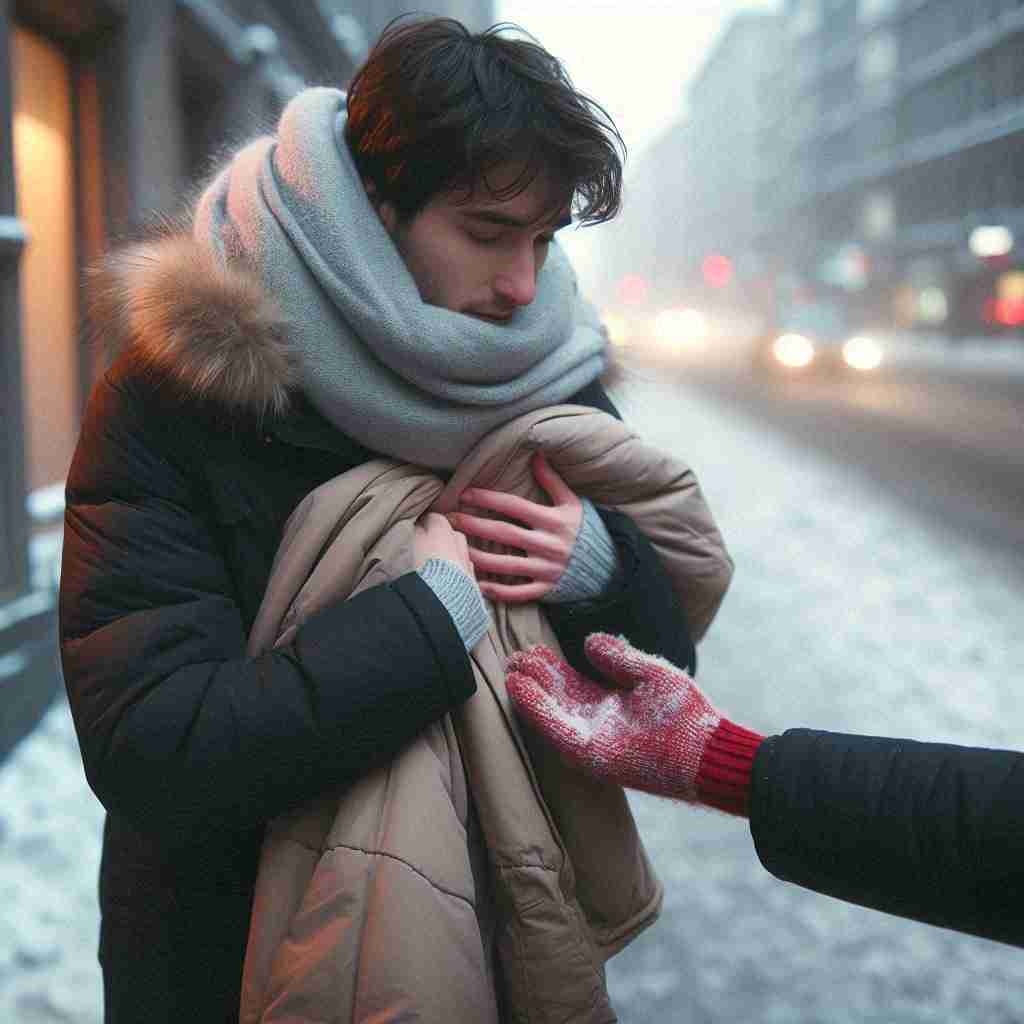
Before my brain could argue, I unzipped my jacket and shrugged it off.
Giving Away the One Thing I Liked
The cold hit my arms instantly, and I sucked in a breath.
I held the jacket out to her like an offering I didn’t have time to rethink.
“You should take this,” I said. “At least until it warms up.”
She blinked, startled, like the scene had suddenly changed genres.
“I couldn’t,” she said, and this time the hesitation was real.
“You can,” I replied. “I’ve got a scarf. I’ll survive.”
The jacket felt heavier in my hands than it ever had on my shoulders. I realized—too late—that I liked that jacket. It fit well. It made me look capable. Put-together. Respectable.
Still, my arms stayed extended.
Slowly, she took it.
Her fingers were icy. When they brushed mine, it felt like touching winter itself. She hugged the jacket to her chest for a moment before slipping it on.

It didn’t transform her.
It just looked right.
Like warmth belonged on a body.
Like it shouldn’t be such a rare thing.
She looked up at me and smiled.
Small. Real. Unexpecting.
The Coin
From her palm, she pressed something into my hand.
A coin.
Old. Rusted. Heavier than it should have been.
“Keep this,” she said. “You’ll know when to use it.”
I frowned, turning it over. It didn’t look valuable. It looked forgotten.
“I think you need it more than I do,” I said.
She shook her head once. Firm. Certain.
“No. It’s yours now.”
The Voice That Changed Everything
I opened my mouth to argue.
Then the office doors burst open behind me.
“Are you serious?”
I turned.
Mr. Harlan.
Immaculate coat. Perfect tie. The expression he reserved for things he considered beneath him.
He glanced at me, then at her.
“We work in finance,” he said flatly. “Not a charity. Clients don’t want to see employees encouraging this.”
“I wasn’t—” I started.
“Don’t.”
The word landed like a slap.
“Clear your desk,” he said. “Effective immediately.”
No warning.
No discussion.
Just finality.
I stood there, jacketless, jobless, holding a rusted coin that suddenly felt absurdly heavy.
Two Weeks of Falling
Two weeks is a short time to lose your footing.
It’s also more than enough time for panic to move in.
I polished my resume like it was a lifeline. I emailed old contacts. I refreshed job boards until my eyes hurt. Rejections came politely. Or not at all.
Savings thinned. Groceries became math. Heat became optional.
On the fourteenth morning, I opened my door for the mail.
And froze.
On the porch sat a small velvet box.
No note.
No return address.
Just waiting.
The Box and the Truth
Inside my apartment, I noticed the slot along the side.
The coin fit perfectly.
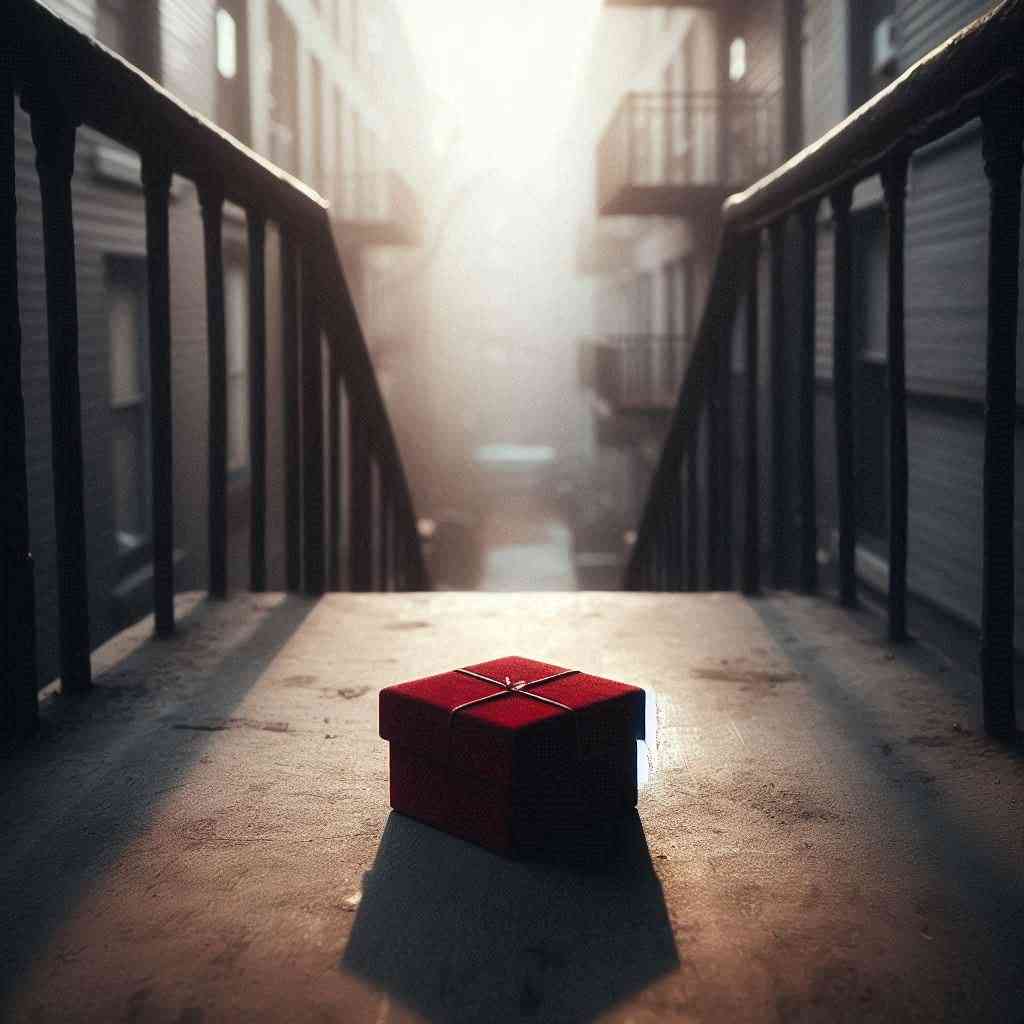
Click.
The lid opened.
Inside was a card and a black envelope.
The card read:
I’m not homeless. I’m a CEO. I test people.
My hands shook.
The envelope held an offer letter. A title that sounded unreal. A salary that made my stomach drop.
At the bottom:
Welcome to your new life. You start Monday.
Full Circle
Monday came fast.
The boardroom door opened.
She stood there—not on concrete, not shivering—but composed, confident.
“You kept the coin,” she said.
“I almost threw it away,” I admitted.
She smiled softly. “That’s why I chose you.”
I thought of the jacket.
The cold.
The cost.
“You didn’t just change my job,” I said. “You changed how I see people.”
She nodded.
“Good,” she said. “Then the test worked.”
And for the first time in weeks, I felt warm again.
0 Comments