

Why Does Heinz Say “57 Varieties” When It Had Far More?
If you’ve ever looked closely at a bottle of Heinz ketchup, you’ve probably noticed the famous words printed on it:
“57 Varieties.”
It sounds like a simple description of the company’s products. But there is a surprising detail behind those two words.
Heinz did not actually have exactly 57 products.
In fact, the company had far more.
So why did the number 57 become one of the most recognizable slogans in food advertising?

The answer reveals an interesting lesson about branding, memory, and the way a simple idea can become more powerful than a complicated fact.
The Number Wasn’t an Exact Product Count
By the time Henry J. Heinz began using the famous slogan, his company was already selling a wide range of foods.
There were sauces, pickles, preserves, vegetables, and many other products.
So “57 Varieties” was never intended to be a precise list of everything Heinz sold.
That raises an obvious question:
Why choose 57?
The story begins in the late 19th century, when Henry Heinz reportedly saw an advertisement promoting a large number of different shoe styles.
The exact details of the story have been retold in different ways over the years, but the basic idea is simple.
Heinz noticed that a specific number made the advertisement more memorable.
Instead of using a vague phrase such as “many styles,” the advertisement used a number.
That number immediately gave the message a sense of structure.
Heinz saw an opportunity.
He wanted a similar idea for his own company.
Why 57?
Heinz reportedly considered the number 57 especially memorable.
There are also stories that the number had personal meaning for him, with five and seven being numbers he particularly liked.
Whatever influenced his final choice, 57 had one major advantage.
It sounded good.
Say it aloud:
Fifty-seven varieties.
It is short.
It has a natural rhythm.
And it is specific enough to make people curious.
A phrase like “many varieties” doesn’t create much of an image in your mind.
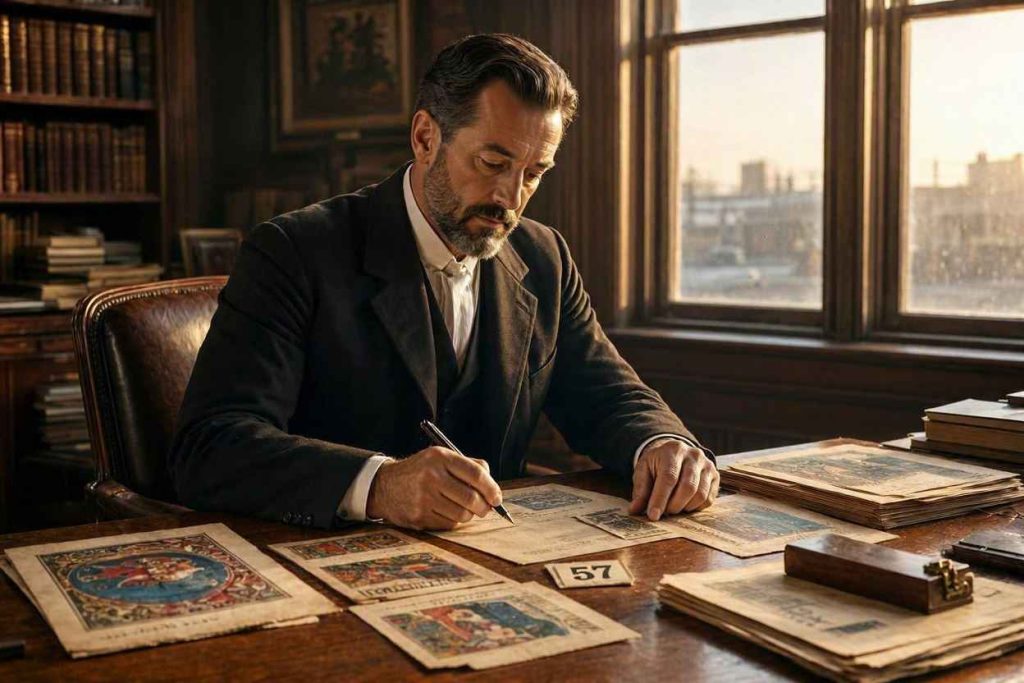
But “57 varieties” feels like something you could count.
It sounds organized and intentional.
That made it much easier to remember.
The Number Became a Marketing Tool
The important thing about “57 Varieties” is that Heinz wasn’t really trying to sell the number itself.
The number represented something bigger.
It suggested choice.
It suggested variety.
It suggested that Heinz had a large selection of products and had been around long enough to understand what customers wanted.
Consumers didn’t need to know the exact number of products.
They simply needed to remember the phrase.
And they did.
Over time, “57 Varieties” became closely connected with the Heinz name.
The slogan appeared on packaging and in advertising, helping customers recognize the brand quickly.
The number eventually became part of the company’s identity.
Why Specific Numbers Are So Memorable
There is an interesting psychological idea behind this type of advertising.
People often find specific information easier to remember than vague statements.
Consider these two phrases:
“We offer many choices.”
and
“We offer 57 choices.”
The first statement is general.
The second feels much more concrete.
Even if you never check whether the number is exact, your brain can easily hold onto it.
That’s one reason numbers are used so often in advertising.
Companies might talk about years of experience, numbers of customers, product options, steps in a process, or other measurable details.
A number gives an idea a shape.
It makes an abstract message easier to picture.
Heinz understood this long before modern advertising became a science.
Why Not Choose a Round Number?
Another interesting part of the slogan is that 57 isn’t a round number.
If Heinz had chosen 50, it might have sounded ordinary.
If he had chosen 100, it could have sounded exaggerated.
But 57 feels oddly specific.
That can make a statement seem more deliberate.
It also makes the phrase more distinctive.
“50 varieties” doesn’t have quite the same personality.
“57 varieties” is unusual enough to stick in your mind.
And once a customer remembers the number, they are more likely to remember the brand connected to it.
That’s excellent branding.
The Slogan Became Bigger Than the Number
Eventually, people didn’t need to know what the 57 represented.
They simply recognized it.
The number became a shortcut for the Heinz brand.
You could see the phrase and immediately know what company it referred to.
That is one of the most valuable things a brand can create.
A symbol, phrase, color, shape, or number becomes so closely connected to a company that consumers recognize it almost instantly.
In that sense, Heinz didn’t just create a slogan.
It created a piece of mental real estate.
The number 57 became associated with Heinz in a way that was difficult for competitors to copy.
It Wasn’t Really About Counting Products
This is perhaps the most important part of the story.
The slogan wasn’t designed to encourage customers to count Heinz products.
It was designed to communicate an idea.
There is plenty to choose from.
That’s what the number represented.
A customer didn’t need a spreadsheet.
They didn’t need a product catalog.
They only needed to remember three simple words:
Heinz. 57 Varieties.
That simplicity gave the slogan enormous staying power.
A Lesson Modern Brands Still Use
The story is more than an interesting piece of food history.
It also explains why memorable branding can be so effective.
People are surrounded by advertisements every day.
Most messages disappear almost immediately.
A complicated slogan may contain more information, but that doesn’t necessarily make it more memorable.
A short, distinctive idea can sometimes have a much greater impact.
Heinz’s famous number worked because it was easy to recognize and easy to repeat.
It communicated variety without requiring a long explanation.
And it gave the company a phrase that customers could associate with the brand for generations.
Why Do We Still Remember 57?
Think about how unusual the story really is.
Heinz could have advertised its entire product catalog.
It could have focused on individual products.
It could have simply said that it offered a large selection.
Instead, it chose two words and one unusual number.
More than a century later, people still recognize the combination.
That’s the real success of “57 Varieties.”
The number became more than a number.
It became a brand symbol.
It represented variety, choice, history, and familiarity.
And it shows how a simple idea can survive for generations when it is easy for people to remember.
The Real Secret Behind “57 Varieties”
So, was Heinz actually limited to 57 products?
No.
The number was not meant to function as a precise inventory of everything the company sold.
Its purpose was much simpler.
It was memorable.
It was distinctive.
And it made the idea of variety feel concrete.
That may be the most interesting lesson of all.
Successful branding doesn’t always depend on giving people the most information.
Sometimes it depends on giving them one idea they will never forget.
For Heinz, that idea was 57.
Not because it represented an exact product count, but because it turned an ordinary marketing message into something people could recognize instantly.
A small number on a bottle became a phrase known around the world.
And that is why, after more than a hundred years, “57 Varieties” still means Heinz.
0 Comments