

She Promised Me Everything Before She D.i.e.d — But at the Will Reading, I Learned the Truth
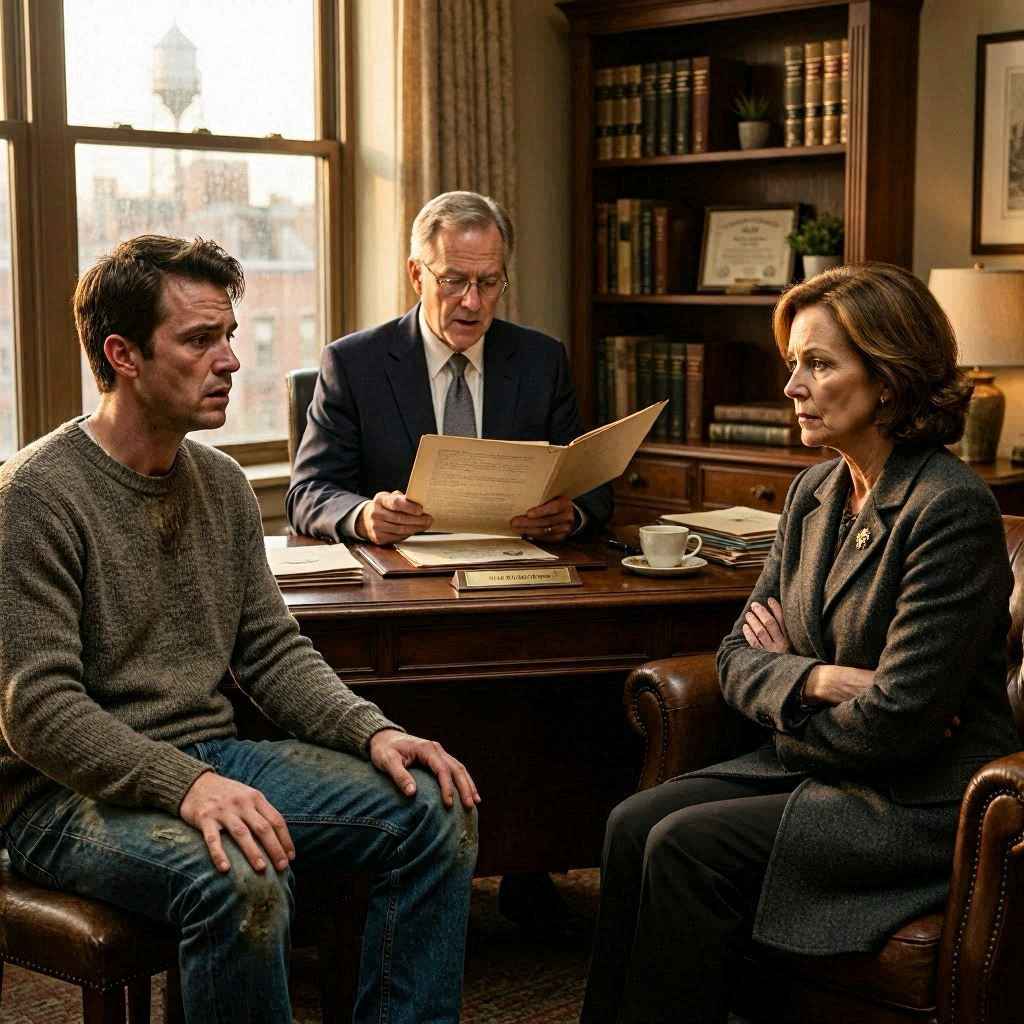
I sat in the lawyer’s office across from Mrs. Rhode’s niece, and every few seconds she looked at me like I didn’t belong there.
The lawyer adjusted his glasses, opened a folder, and began reading in a voice so emotionless it almost sounded rehearsed.
“The house on Willow Street is to be donated to Saint Matthew’s Outreach Charity.”
I frowned.
“What?”
He continued without looking up.
“Her savings will be divided among Saint Matthew’s Church and several charitable organizations. Her jewelry collection will go to her niece.”
That was it.
No pause.
No mention of me.
I waited anyway, convinced my name had to come next.
Mrs. Rhode had promised me everything.
For more than a year, I had taken care of her. I drove her to doctor appointments, cleaned her house, sorted her medications, repaired broken things around the property, and sat beside her during lonely evenings when the world seemed to forget she existed.
She told me countless times:
“When I’m gone, what I have will become yours.”
But the lawyer closed the folder.
“That concludes the reading.”
My stomach dropped.
“That’s all?” I asked quietly. “But she told me—”
The words died in my throat.
A horrible realization settled over me.
Had she lied?
I stood up before anyone could see my face breaking apart and walked out of the office without another word.
The Feeling I Knew Too Well
Back at my apartment, I collapsed onto my bed without even taking off my boots.
At first, I felt angry.
Then embarrassed.
Then came the familiar ache I had spent my whole life trying to outrun—the feeling of realizing I had believed in someone too much.
Because somewhere along the way, Mrs. Rhode had stopped feeling like a job.
She had started feeling like family.
And maybe that was my mistake.
I grew up in foster care.
My mother disappeared when I was an infant, and my father spent most of my childhood in prison. I learned very young that promises were fragile things. People made them easily and broke them even easier.
By eighteen, I owned two trash bags of clothes and not much else.
I moved to a small town where rent was cheap and nobody cared enough to ask questions. I bounced between bad jobs until one morning I walked into Joe’s Diner during a breakfast rush and asked if they needed help.
Joe looked at me for exactly five seconds.
“You ever carried three plates before?”
“No.”
“You’ve got ten minutes to learn.”
That was Joe.
Blunt. Loud. Built like an old refrigerator.
And somehow one of the kindest people I’d ever met.
The Woman Who Changed My Life
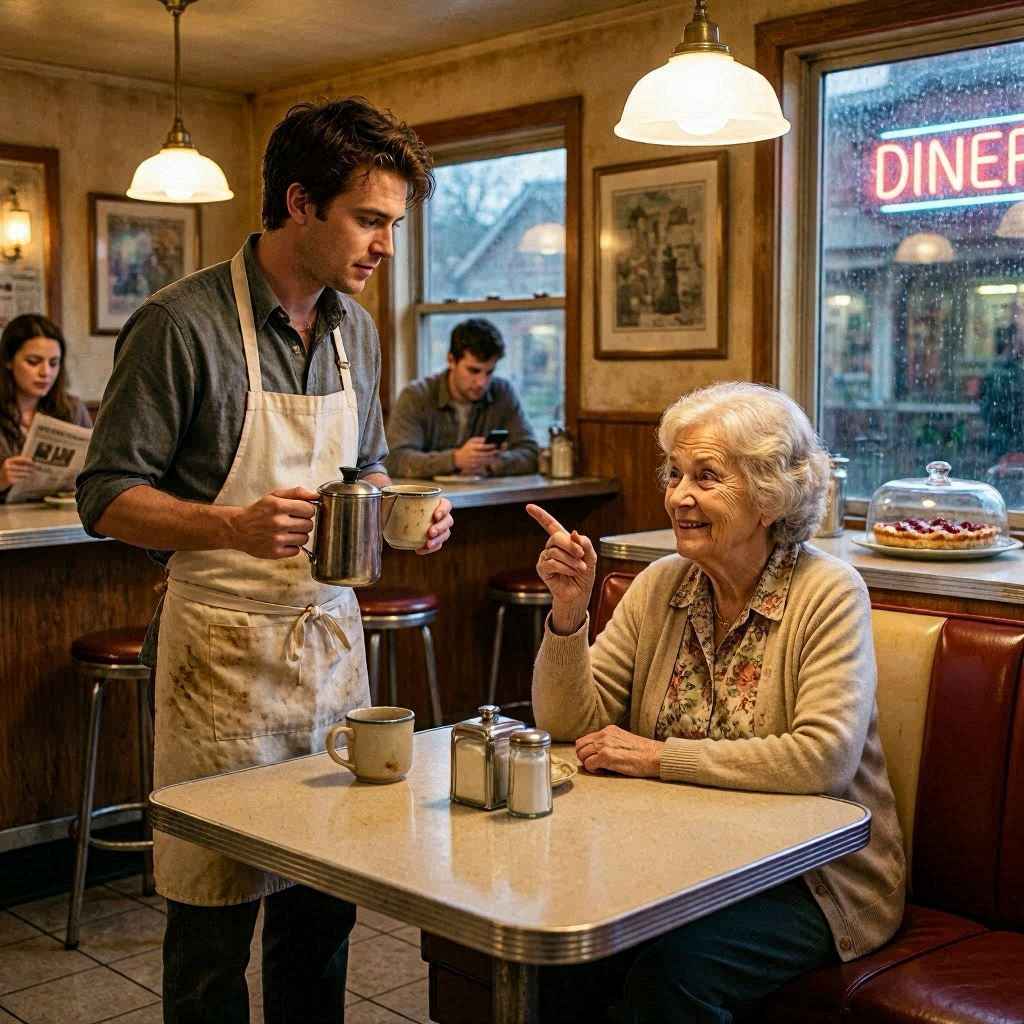
Mrs. Rhode came into the diner every Tuesday and Thursday morning at exactly eight o’clock.
The first time I served her, she narrowed her eyes at my nametag.
“James,” she said. “You look exhausted enough to collapse into my pancakes.”
“Long week.”
She snorted.
“Try being eighty-five.”
That was our introduction.
After that, she always requested my section.
She was difficult in a way that somehow became funny after a while.
“You ever smile?” she once asked.
“Sometimes.”
“I doubt it.”
Another morning she frowned at my hair.
“It somehow gets worse every time I see you.”
“Nice seeing you too.”
“Hm,” she replied. “You almost sound alive today.”
She wasn’t warm.
Not exactly.
But she noticed things.
And when you spend your whole life feeling invisible, being noticed can feel dangerously close to being loved.
The Offer
One afternoon, while I was carrying groceries home, Mrs. Rhode called out to me from her porch.
“You live nearby, James?”
“Just down the street.”
She studied me for a moment.
“You want to earn decent money?”
I hesitated.
“Doing what?”
“Come inside,” she said. “I’ll explain over tea.”
The tea tasted terrible.
Like hot grass.
But she got straight to the point.
“I’m dying.”
I nearly choked.
She rolled her eyes immediately.
“Oh, don’t be dramatic. I’m eighty-five, not immortal.”
Then she explained everything.
She needed help.
Groceries. Appointments. Medication. Repairs. Company.
“I don’t have anyone reliable,” she admitted quietly.
“And what do I get?” I asked carefully.
She looked directly at me.
“When I’m gone, everything becomes yours.”
I stared at her.
“You barely know me.”
“I know enough.”
It sounded unbelievable.
Maybe even foolish to trust.
But I needed the work.
And honestly?
Some lonely part of me wanted her to mean it.
So I agreed.
Somewhere Along the Way, We Became Family
At first, it was just practical.
I fixed broken cabinet doors.
Cleaned gutters.
Drove her around town.
Organized her pills into tiny plastic containers.
And she complained through all of it.
“You’re late.”
“It’s been four minutes.”
“Still late.”
But gradually, things changed.
She started asking me to stay for dinner.
Her cooking was terrible.
Once she made a meatloaf so dry I nearly choked trying to swallow it.
“This is awful,” I told her.
She pointed a fork at me.
“Then starve.”
Some evenings we watched television together while she shouted answers at game show contestants like they could hear her.
And slowly, without meaning to, I started telling her things I had never told anyone else.
About foster homes.
About learning not to get attached.
About surviving instead of planning.
One night she muted the television and looked at me carefully.
“You only think one week ahead,” she said. “Don’t you have dreams?”
I shrugged.
“Maybe someday I’ll move up at the diner.”
She looked unimpressed.
“Well,” she said, “it’s a start.”
That winter she knitted me the ugliest green socks I had ever seen.
“I made those so your feet don’t freeze,” she said.
I wore them anyway.
The Day I Lost Her
I had been helping Mrs. Rhode for a little over a year when I found her sitting silently in her chair one cold morning.
The television was still on.
A cup of tea sat untouched beside her.
I knew immediately.
But I still whispered her name anyway.
Then I dropped to my knees beside her chair and cried harder than I had cried in years.
The funeral passed like a blur.
Then came the will reading.
Then the humiliation.
Then the crushing belief that I had misunderstood everything between us.
The next morning, someone knocked on my apartment door.
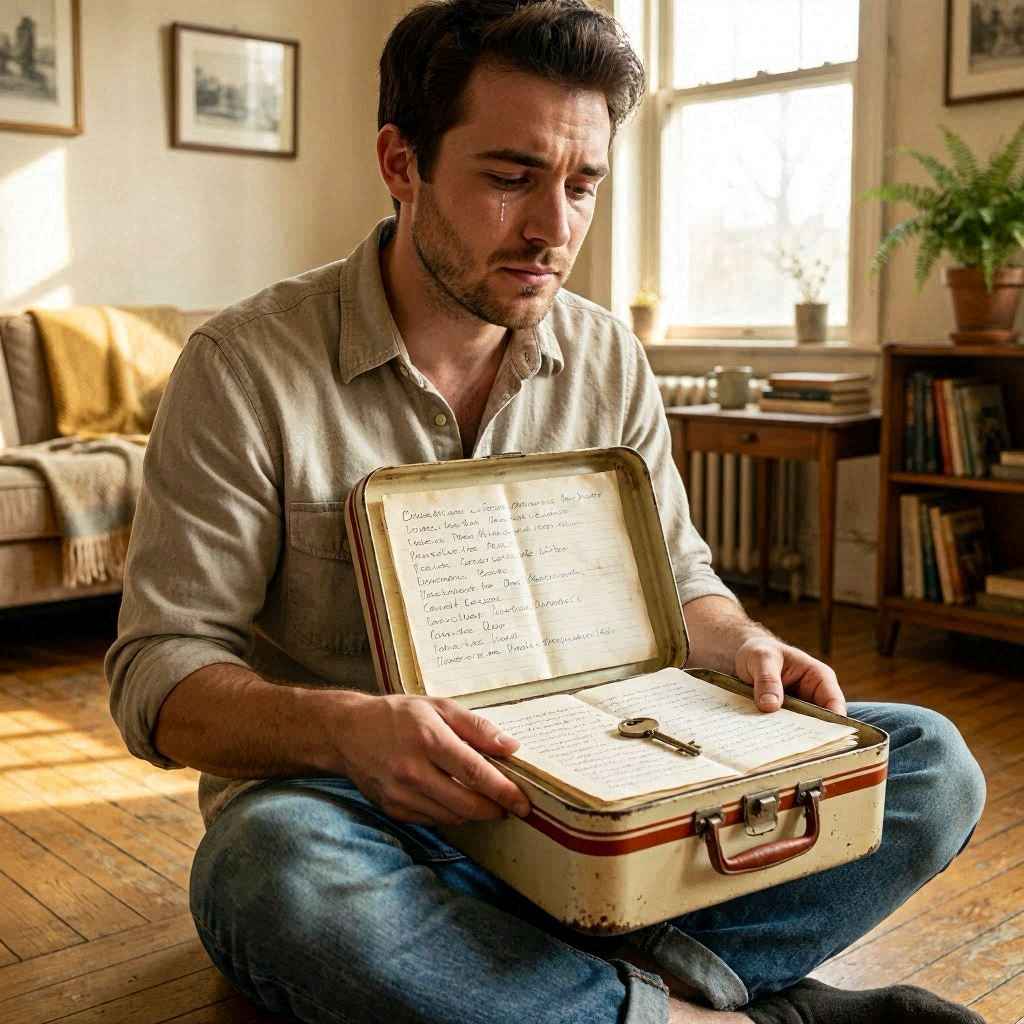
When I opened it, Mrs. Rhode’s lawyer stood there holding an old metal lunchbox.
“She left this for you,” he said quietly.
The Truth Inside the Lunchbox
Inside the lunchbox was an envelope with my name written in shaky handwriting.
And a small metal key.
My hands trembled as I unfolded the letter.
James,
You’re probably angry right now.
But what I prepared for you matters more than a house.
My chest tightened instantly.
Somewhere between grocery runs, burnt dinners, and terrible television, you became the son I found too late in life.
I broke down right there on my apartment floor.
She had cared.
I kept reading through blurred eyes.
You once told me you wanted to keep working at the diner.
So now part of it belongs to you.
Months ago, I quietly purchased ownership shares in Joe’s Diner under your name.
Joe agreed to teach you how to run the business properly.
A house can crumble.
Money can disappear.
But I hope this gives you something stronger:
A reason to dream.
The First Time I Saw a Future
I don’t even remember leaving the apartment.
One moment I was crying on the floor.
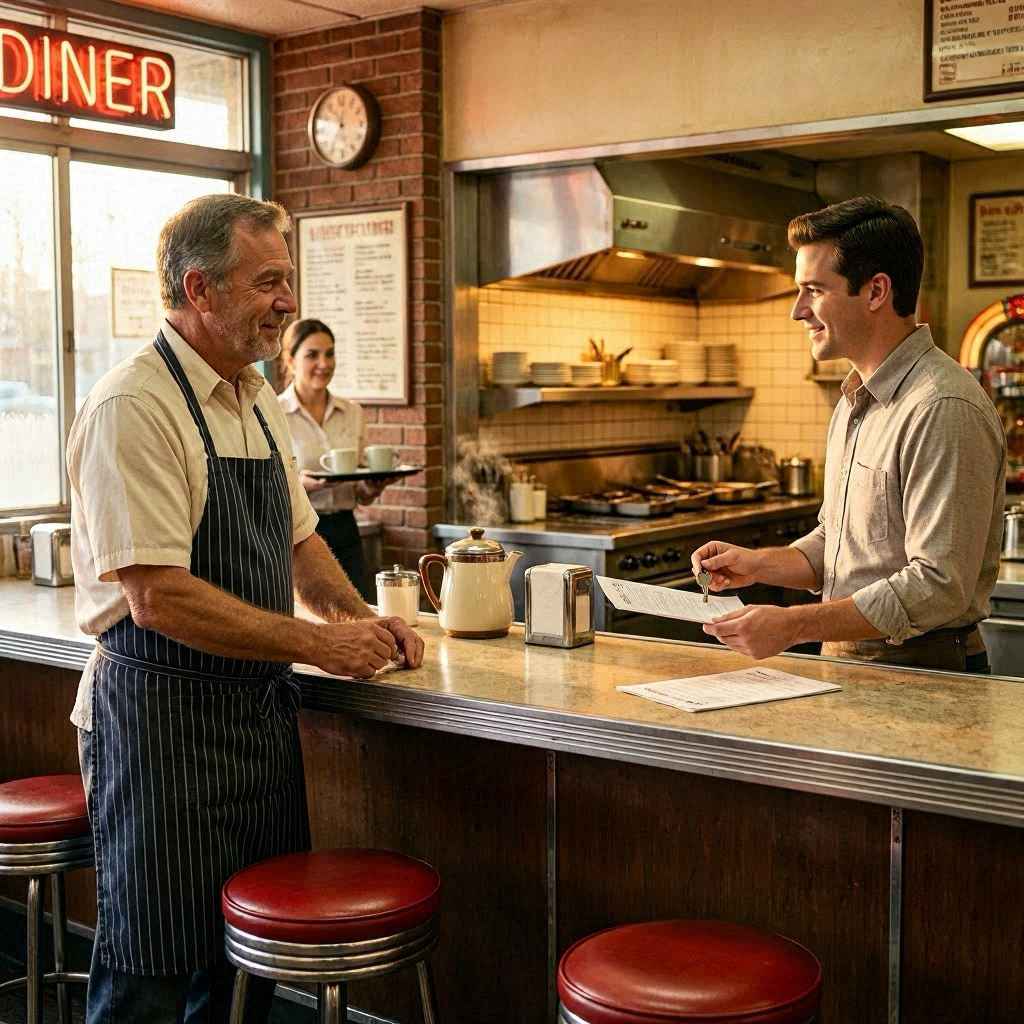
The next, I was standing inside Joe’s Diner gripping that tiny metal key in my hand.
Joe looked up from behind the counter.
I held up the key.
“Is it true?”
He nodded slowly and pulled a folder from beneath the register.
Inside were legal documents with my name printed across them.
Ownership papers.
Bank records.
Everything official.
Everything real.
I laughed and cried at the same time, too overwhelmed to care how ridiculous I looked.
Joe watched me quietly before speaking.
“She was proud of you,” he said softly. “You know that, right?”
I covered my face with one hand, trying not to completely fall apart in the middle of the diner.
After a moment, Joe cleared his throat.
“All right,” he grumbled. “Enough crying.”
Then he pointed toward the kitchen.
“We open at five tomorrow, partner.”
And for the first time in my life, I stopped thinking about survival.
For the first time, I started thinking about the future.
0 Comments