

I Thought It Was a Romantic Date Night—Then Her Entire Family Showed Up and Expected Me to Pay
The trap didn’t look like a trap when I walked into the restaurant.
It looked like a perfectly normal date night.
The kind of evening every couple enjoys from time to time.
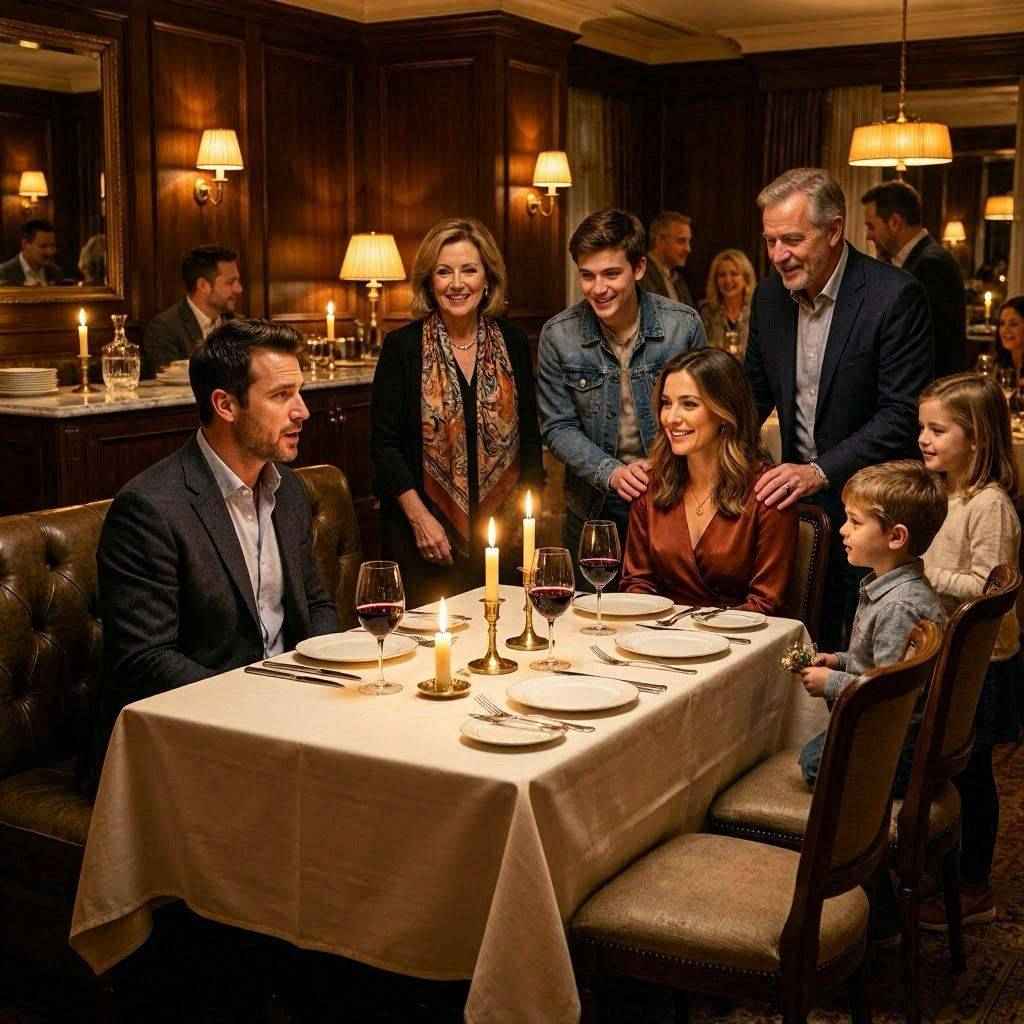
Soft jazz drifted through the dining room. Candlelight flickered across white tablecloths. The smell of fresh bread and grilled steak filled the air. Servers moved gracefully between tables carrying trays loaded with food while couples chatted quietly over glasses of wine.
Nothing seemed unusual.
Nothing felt suspicious.
In fact, I was looking forward to the evening.
Work had been stressful lately, and spending a relaxing night with my girlfriend sounded exactly like what I needed.
When I spotted her sitting near the window, she greeted me with a bright smile and a quick kiss.
“Hey, you,” she said cheerfully.
“Hey.”
She looked unusually excited.
At the time, I thought it was cute.
Looking back, it should have been my first warning.
We ordered drinks and started talking. The conversation flowed easily. We laughed about work, shared stories from our week, and discussed plans for an upcoming weekend trip.
Everything felt normal.
Almost too normal.
Every few minutes, though, I noticed her glancing toward the entrance.
At first, I ignored it.
Maybe she was distracted.
Maybe she recognized someone.
Maybe I was imagining things.
Then the restaurant doors opened.
A middle-aged couple walked inside.
My girlfriend immediately waved.
My smile faded.
Her parents.
Before I could even process what was happening, they were walking toward our table.
“Oh good, you made it!” she said.
Made it?
I hadn’t realized anyone else was coming.
Her parents greeted me warmly and pulled up chairs.
I assumed that would be the end of it.
I was wrong.
A few minutes later, the doors opened again.
This time it was her brother and his wife.
Then came an aunt.
Then a cousin.
Then another relative I had never met before.
Within twenty minutes, what I believed was a quiet dinner for two had transformed into a full-scale family gathering.
The restaurant staff began rearranging tables to accommodate everyone.
Extra chairs appeared.
More menus arrived.
More drinks were ordered.

I sat there trying to understand what was happening.
My girlfriend noticed my expression and laughed.
“Relax,” she said.
“It’s just family.”
Just family.
The words sounded innocent enough.
But something felt off.
Everyone seemed comfortable.
Everyone seemed prepared.
Everyone acted like they knew exactly why they were there.
Everyone except me.
I was the only person who looked surprised.
That uncomfortable feeling in my stomach started growing.
Then the food started arriving.
And that’s when things became impossible to ignore.
Appetizers covered the table.
Shrimp platters.
Calamari.
Premium cheese boards.
Specialty dishes I couldn’t even pronounce.
The orders kept coming.
Steaks.
Seafood.
Bottles of wine.
Desserts ordered before dinner was even finished.
At one point, there was so much food on the table that servers had difficulty finding space to set down new plates.
Everyone seemed to be having a wonderful time.
Everyone except me.
Because every time another expensive item arrived, one thought echoed inside my head.
Who’s paying for all this?
Nobody mentioned splitting the bill.
Nobody asked how the check would be handled.
Nobody offered to contribute.
Instead, something stranger happened.
People started complimenting me.
“You’re such a generous guy.”
“She’s lucky to have you.”
“It’s refreshing to meet a man who knows how to treat people.”
“Real men take care of family.”
At first, those comments sounded flattering.
But after hearing them repeatedly, they started feeling different.
Less like compliments.
More like expectations.
Each remark seemed carefully designed to push me toward a specific role.
The Provider.
The Wallet.
The Guy Who Pays.
The evening continued.
The laughter grew louder.
The food kept coming.
And the knot in my stomach tightened.
Then the bill arrived.
The waiter placed a black leather folder in the center of the table.
For a moment, nobody moved.
Nobody reached for it.
Nobody glanced at it.
Nobody offered to help.
Instead, something happened that made my heart sink.
Every eye slowly shifted toward me.
Not dramatically.
Not obviously.
Just enough.
Enough to make it clear what everyone expected.
I opened the folder.
The total nearly made me laugh.
Over four hundred dollars.
For a second, I honestly wondered if there had been a mistake.
Then I looked around the table.
Nobody appeared surprised.
Nobody seemed concerned.
In fact, several people were smiling.
Waiting.
My girlfriend leaned closer.
“You’ve got this, right?”
The words were casual.
Almost playful.
But they didn’t feel like a question.
They felt like an assumption.
A test.
A requirement.
As I stared at the bill, the waiter suddenly appeared beside me.
Without drawing attention, he slipped a folded piece of paper into my hand.
“Sir,” he said quietly.
“I think you dropped this.”
I knew immediately it wasn’t mine.
Confused, I slipped it beneath the table and unfolded it.
The message was short.
Just one sentence.
But it changed everything.
“You’re not the first boyfriend she’s brought here. The last two paid too. Think carefully before you open your wallet.”
My pulse quickened.
I read the note again.
And again.
The room around me suddenly felt different.
Not because the note revealed something new.
Because it confirmed something I had been ignoring for months.
Like pieces of a puzzle finally snapping together.
The expensive gifts she expected.
The guilt trips whenever I said no.
The arguments that somehow always became my fault.
The constant pressure to prove my love through spending money.
The expectation that generosity should only move in one direction.
The waiter hadn’t shown me a secret.
He had simply pointed toward a truth I already knew.
A truth I didn’t want to admit.
The problem wasn’t the bill.
The problem was the pattern.
For months, I had been ignoring discomfort.
Ignoring warning signs.
Ignoring boundaries.
I had convinced myself that every red flag was a misunderstanding.
Every concern was overthinking.
Every uncomfortable feeling was my own insecurity.
Now that illusion was collapsing.
The restaurant wasn’t creating a problem.
It was exposing one.
I looked around the table again.
This time I saw things differently.
I saw expectations instead of appreciation.
Entitlement instead of gratitude.
Assumptions instead of respect.
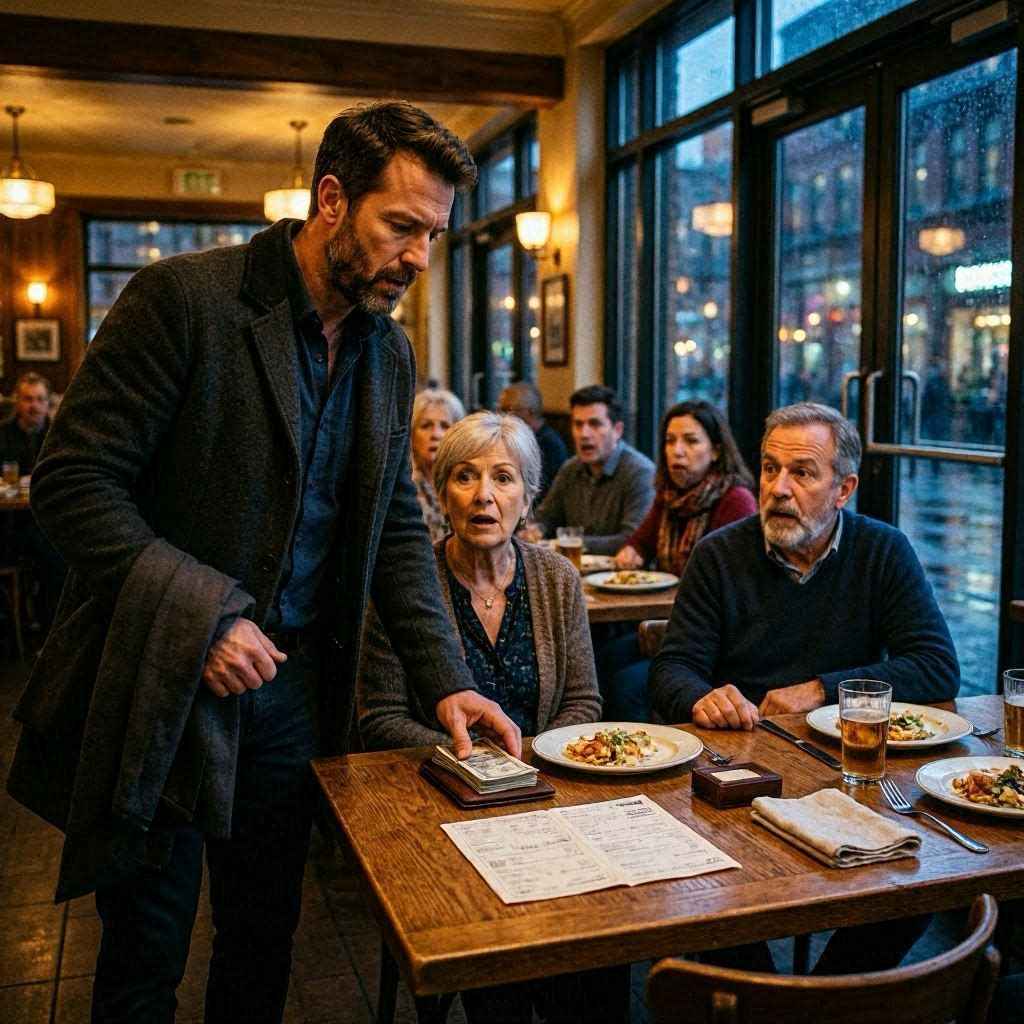
Slowly, I closed the folder.
Then I pushed it back toward the center of the table.
Confusion spread immediately.
My girlfriend frowned.
“What are you doing?”
I stood up.
The entire table went silent.
“I’m paying for my meal,” I said calmly.
“Nothing else.”
For a moment, nobody spoke.
Then chaos erupted.
“What?”
“Are you serious?”
“That’s unbelievable.”
“It’s family!”
“What kind of man does that?”
The reactions came from every direction.
Anger.
Disbelief.
Judgment.
Pressure.
Exactly what I expected.
But something surprising happened.
Instead of feeling embarrassed, I felt calm.
Maybe calmer than I had felt in months.
Because I finally understood something important.
This was never about four hundred dollars.
Four hundred dollars wasn’t life-changing.
Annoying?
Absolutely.
But manageable.
The real issue was what that bill represented.
It represented a future.
A future where my value depended on what I provided.
A future where generosity became obligation.
A future where boundaries were treated as selfishness.
A future where saying “no” automatically made me the villain.
That restaurant bill wasn’t a dinner expense.
It was a preview.
A glimpse into what the relationship would become if I continued ignoring reality.
I placed enough cash on the table to cover my meal and drink.
Then I walked away.
Behind me, voices continued arguing.
Accusations followed me toward the door.
But with every step, they sounded quieter.
Less powerful.
Less important.
When I stepped outside, cool night air hit my face.
For the first time all evening, I could breathe.
I stood beneath the glow of the parking lot lights and looked back at the restaurant.
Inside, people were still arguing.
Still angry.
Still trying to decide who would pay the bill.
But none of that was my problem anymore.
Because that night, I didn’t just avoid an unfair restaurant charge.
I avoided something far more expensive.
A relationship built on entitlement.
A future built on resentment.
A cycle of giving endlessly while being told it still wasn’t enough.
The waiter probably forgot about that note within days.
He likely moved on to serving hundreds of other customers.
But I’ll never forget it.
Not because it saved me four hundred dollars.
Because it forced me to confront something I desperately needed to learn.
Sometimes the most valuable thing you can do isn’t paying the price others expect.
Sometimes it’s recognizing your own worth.
Standing up from the table.
Walking away.
And refusing to finance your own unhappiness.
That night, I thought I was losing a relationship.
Looking back, I realized I escaped a transaction disguised as one.
0 Comments