

My Half-Sister Inherited Everything My Father Owned. I Received Only His Old Cactus—Until I Repotted It
When the lawyer reached my name, the room became strangely quiet.
I had spent the entire morning preparing myself for disappointment, but nothing could have prepared me for what came next.
“The house will pass to your half-sister,” the lawyer said in a calm, practiced voice.
I nodded.
That wasn’t surprising.
He continued reading.
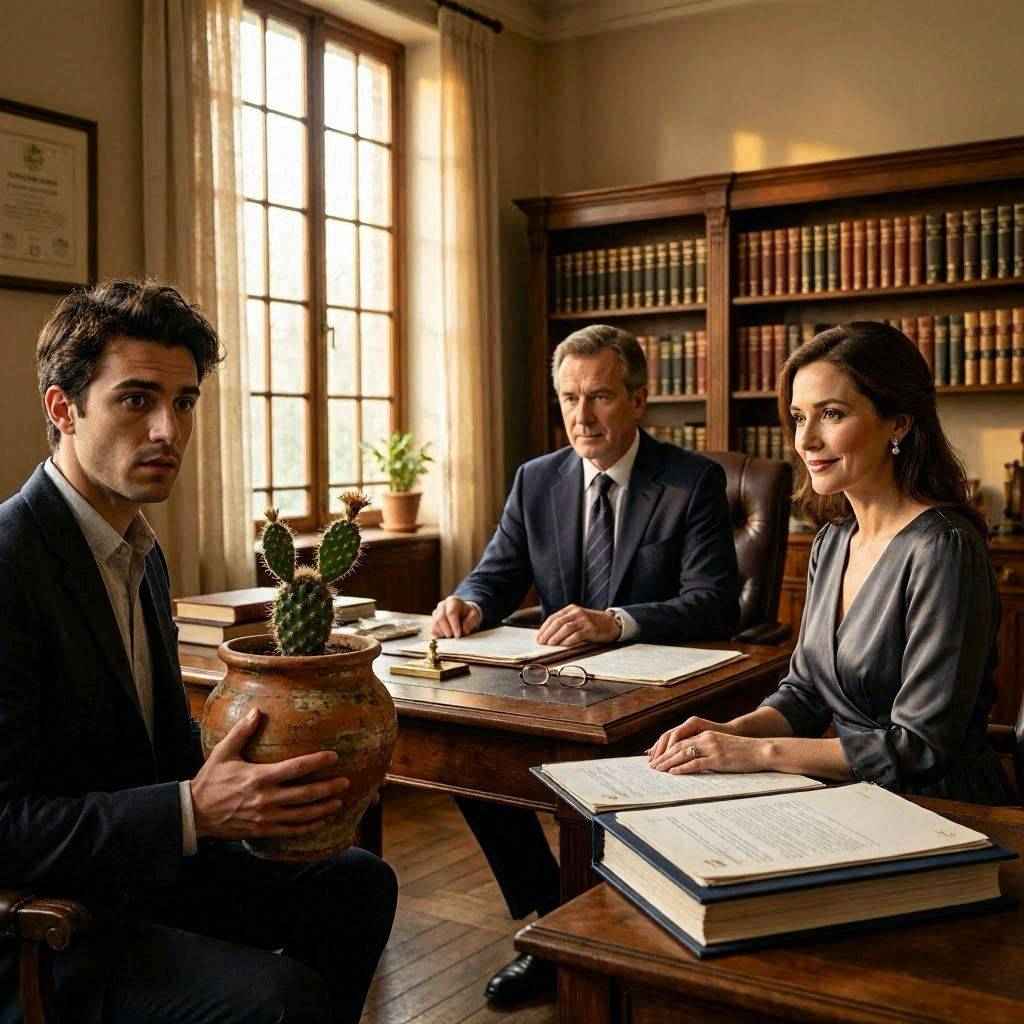
“The savings accounts, investment portfolio, vehicles, and all remaining financial assets will also be transferred to her.”
Again, I nodded.
By then, I had already accepted that my father had made his decision.
Then the lawyer turned one final page.
“To you,” he said, looking directly at me for the first time, “your father leaves his cactus.”
For a moment, I thought I had misheard.
“My… what?”
“The cactus,” he repeated.
“The potted cactus that sat beside his living room window.”
Silence filled the office.
Then my half-sister laughed.
Not loudly.
Not cruelly.
Just enough for everyone to hear.
“Well,” she said with a shrug, “I guess someone had to inherit the houseplant.”
The lawyer cleared his throat awkwardly before sliding the paperwork across the desk.
The meeting was over.
Just like that.
My father was gone.
His entire life had been divided into neat legal paragraphs.
And my portion of that life fit inside a clay pot.
Outside the office, my half-sister caught up with me while carrying a folder thick with property documents.
“I hope you’re not upset,” she said.
“I have kids to think about. Dad knew they needed security.”
I looked down at the small cactus in my hands.
It wasn’t beautiful.
It wasn’t rare.
It wasn’t even particularly healthy.
One side leaned slightly toward the light from years of sitting on the same windowsill.
Tiny scratches covered the old terracotta pot.
“I’ll be fine,” I answered quietly.
She smiled, relieved.
“I knew you’d understand.”
Then she walked toward her car without looking back.
I stood alone in the parking lot holding the only thing my father had chosen to leave me.
On the drive home, I couldn’t stop glancing at the passenger seat where the cactus rested, secured by the seatbelt as though it were another passenger.
The whole situation felt absurd.
Part of me wondered if there had been a mistake.
Another part wondered whether this had been my father’s final way of telling me I had never mattered as much as I wanted to believe.
Grief has a strange way of twisting ordinary thoughts into painful questions.
By the time I reached my apartment, I felt emotionally exhausted.
I carried the cactus inside and placed it near the kitchen window.
The afternoon sunlight fell across its small green arms.
For several minutes, I simply stared at it.
That plant had always been part of my father’s house.
As a child, I remembered asking why he kept such an ordinary-looking cactus instead of colorful flowers.
He had smiled.
“Flowers are beautiful,” he once told me.
“But they need constant attention.”
He gently touched one of the cactus spines.
“This little fellow survives almost anything.”
At the time, I hadn’t understood why that mattered.
Now those words echoed differently.
Over the following days, the cactus quietly became part of my routine.
Every morning while making coffee, I glanced toward the window.
Every evening before bed, I checked whether the soil looked too dry.
Caring for it required almost nothing.
A little sunlight.
Very little water.
Mostly patience.
The more I looked at it, the more it reminded me of my father himself.
He had never been a man who demanded attention.
He wasn’t loud.
He wasn’t flashy.
He rarely talked about his own struggles.
He simply kept going.
Working.
Providing.
Showing up.
Even when life became difficult.
He carried burdens without announcing them.
Much like the cactus, he endured quietly.
One afternoon, about a week after the funeral, my phone rang.
My half-sister.
I almost didn’t answer.
“Hi,” she said softly.
Her voice sounded different.
Less confident.
“I’ve been thinking.”
I waited.
“About the cactus.”
I glanced toward the kitchen window.
“What about it?”
She hesitated.
“I know this might sound strange… but would you consider giving it to me?”
The request surprised me.
“I thought you didn’t want it.”
“I didn’t.”
She paused.
“But after cleaning out Dad’s house, I kept looking toward the window where it used to sit.”
Her voice cracked slightly.
“The room doesn’t feel right without it.”
I understood exactly what she meant.
Grief often hides inside ordinary objects.
A favorite chair.
A coffee mug.
A jacket hanging by the door.
Or a cactus that had quietly watched decades pass from the same windowsill.
Still, something inside me resisted.
“I’m sorry,” I said gently.
“I don’t think I can.”
She didn’t argue.
“I understand.”
We ended the call politely.
There was no anger.
No accusations.
Just two people mourning the same man in different ways.
Life slowly settled into a new rhythm.
Work became busy again.
The sharpest edges of grief softened.
But every morning, the cactus reminded me that some absences never truly disappear.
Several weeks later, I noticed something unusual.
Roots had begun pushing against the inside of the pot.
The cactus had outgrown its home.
I drove to a garden center and bought fresh cactus soil along with a slightly larger clay pot.
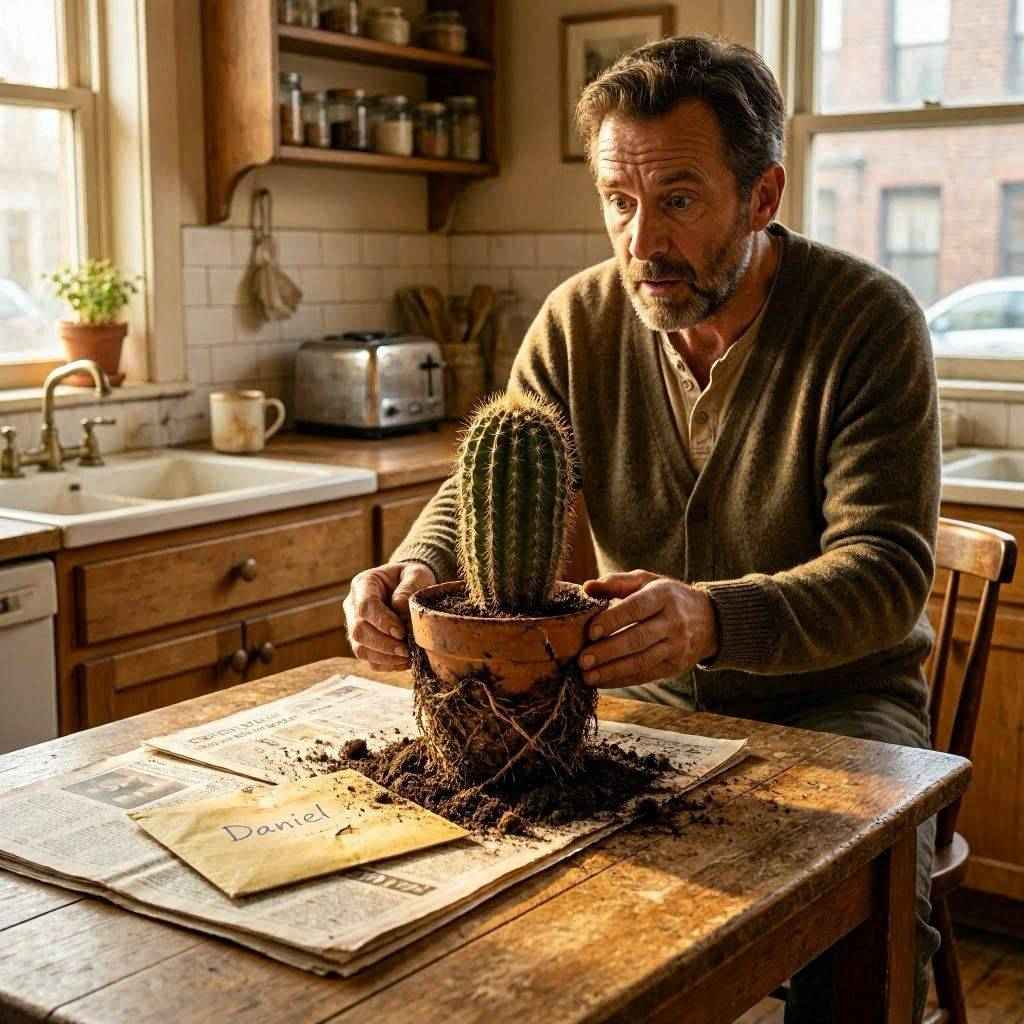
That Saturday afternoon, I spread newspapers across my kitchen table and carefully began repotting the plant.
I loosened the dry soil with a small gardening tool.
The roots were tightly packed.
Much tighter than I expected.
As I gently lifted the cactus free, something hard caught against the edge of the tool.
At first I assumed it was a rock.
Then I brushed away more dirt.
My fingers touched paper.
Paper?
Confused, I carefully uncovered the object.
Buried beneath the roots was a small sealed envelope.
Yellowed with age.
Perfectly protected from the light.
My heart began beating faster.
The handwriting across the front stopped me cold.
My name.
Written by my father.
For several seconds, I simply stared.
He had hidden this here.
Years ago.
Knowing only someone who truly cared for the plant would eventually discover it.
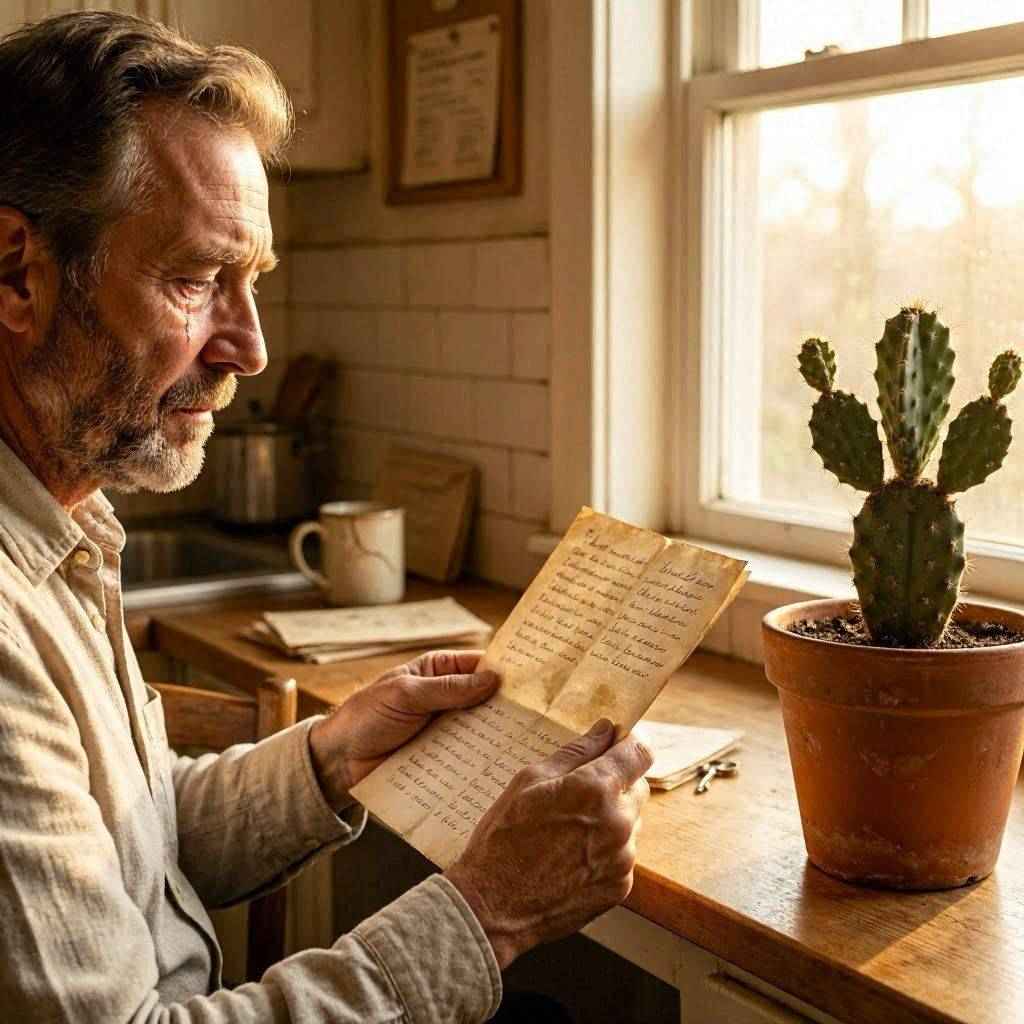
My hands trembled as I carefully opened the envelope.
Inside was a folded letter.
The paper smelled faintly of dust and old books.
His handwriting was unmistakable.
Slow.
Neat.
Deliberate.
James,
If you’re reading this, it means you’ve done something very few people would think to do.
You’ve cared enough to keep this little cactus alive.
You probably wondered why I left it to you instead of something more valuable.
The truth is, I never believed the most important things could be measured by money.
I’m sorry for the mistakes I made.
I know there were times I wasn’t the father you deserved.
There were conversations we never had.
Apologies I waited too long to give.
But if life taught me anything, it’s that strength isn’t loud.
It’s quiet.
It keeps going.
It survives difficult seasons without losing hope.
That’s why I always loved this cactus.
It reminded me of the kind of person I hoped you would become.
Not someone who chased attention.
Someone who quietly endured.
Someone who chose kindness even when life wasn’t kind in return.
Watching you grow into that person has been the greatest privilege of my life.
I hope this plant reminds you that lasting things rarely demand applause.
They simply keep growing.
I love you.
Always.
Dad.
By the time I reached the final line, tears blurred the page.
For weeks, I had believed my father had overlooked me.
That the cactus had been an afterthought.
Instead, it had been the most personal gift he could have chosen.
The inheritance wasn’t hidden beneath the soil.
The lesson was.
He had trusted that I would eventually discover it—not because I was searching for treasure, but because I cared enough to nurture something small and seemingly insignificant.
That realization changed everything.
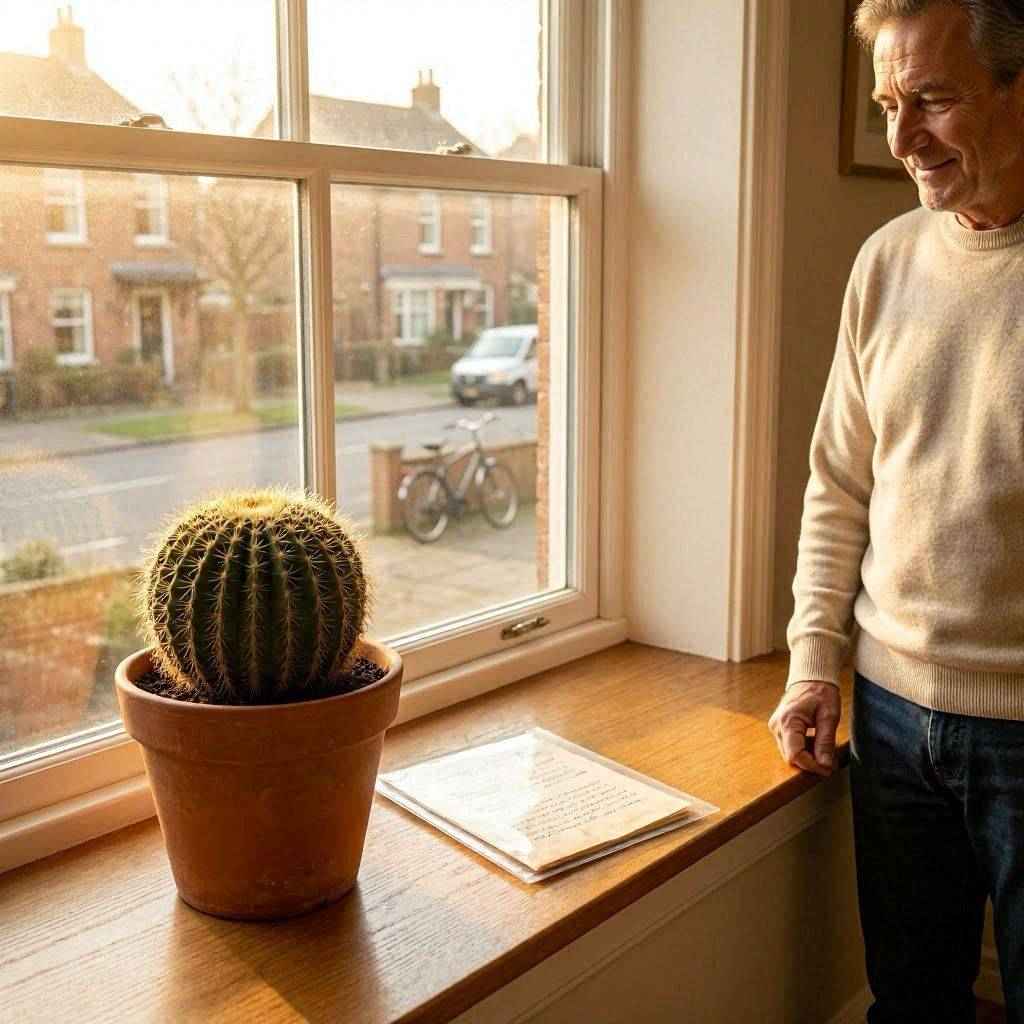
I folded the letter carefully and placed it in a protective sleeve.
It now rests in the drawer beside my bed.
The cactus still sits by my window.
It’s larger now.
Healthier than ever.
Every time I water it, I remember that some gifts cannot be measured in dollars or deeds.
Some legacies arrive quietly.
They ask for patience instead of applause.
Attention instead of ambition.
Love instead of ownership.
My half-sister inherited the things my father spent a lifetime collecting.
I inherited the words he spent a lifetime trying to say.
Looking back, I no longer believe I received less.
If anything, I received the one thing that continues to grow long after every other inheritance has been divided.
Sometimes the smallest gift carries the greatest meaning.
And sometimes, the most valuable inheritance is simply knowing you were deeply loved.
0 Comments