

Most Beachgoers Ignore This Purple Flag—Until They Learn What It Really Means
A day at the beach usually begins the same way.
You unload the chairs.
Spread out the towels.
Rub sunscreen onto your shoulders.
Listen to the waves crashing against the shore.
For most people, the biggest decisions involve whether to swim first or relax under an umbrella.
Very few stop to study the flags flying beside the lifeguard tower.
Yet those colorful flags can tell you more about the ocean than the sky ever could.
Most visitors already know the basics.
A green flag means conditions are generally calm.
A yellow flag suggests extra caution.
A red flag warns of dangerous surf, and double red flags usually mean the water is closed to swimmers.
But then there’s one flag that leaves many people scratching their heads.

Purple.
Unlike the others, it doesn’t warn about rough waves or powerful currents.
It warns about something you probably can’t see.
Something already in the water.
And although that may sound alarming, understanding what the purple flag actually means can help you enjoy your beach day with greater confidence—not fear.
The Meaning Behind the Purple Flag
The first time many people notice a purple flag, they immediately assume the beach has become unsafe.
Some gather their belongings.
Others keep their children on shore.
A few leave altogether.
But in most cases, none of that is necessary.
A purple flag simply means that potentially hazardous marine life has been spotted nearby.
That could include:
- Jellyfish
- Stingrays
- Portuguese man o’ war
- Sea lice
- Small sharks in certain regions
- Other marine creatures capable of causing stings or minor injuries
The important word is potentially.
The flag doesn’t mean these animals are attacking swimmers.
It doesn’t mean the ocean is closed.
It simply means lifeguards have observed marine life in the area and want beachgoers to remain alert.
Think of it as information rather than an emergency.
Why Beaches Raise the Flag
The ocean changes constantly.
Currents shift.
Tides move.
Wind pushes marine animals closer to shore one day and farther away the next.
Lifeguards monitor these conditions throughout the day.
If they notice increased jellyfish activity or several stingray sightings, they’ll often raise the purple flag so visitors know what to expect before entering the water.
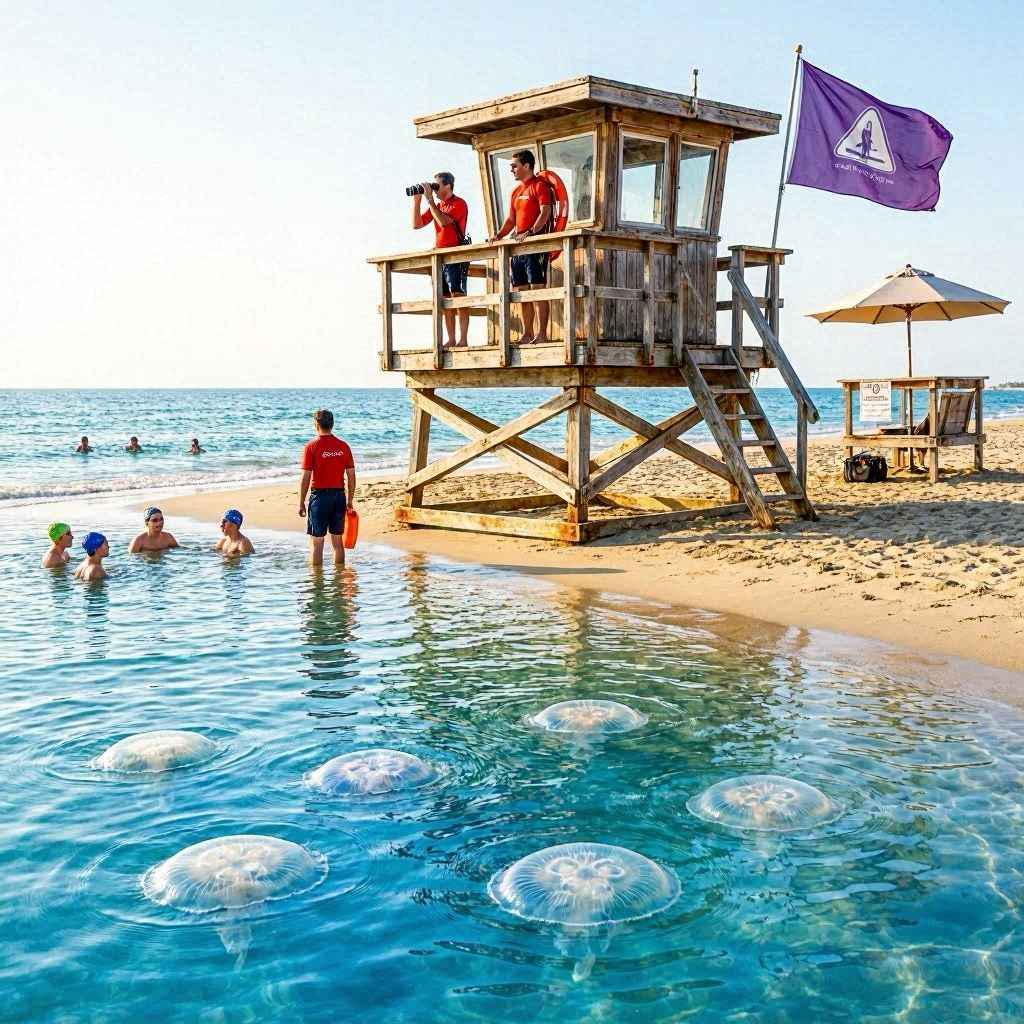
It’s part of a larger beach safety system designed to help people make informed decisions rather than surprising them after an encounter.
Most beaches would rather warn you early than treat an injury later.
The Marine Life Behind the Warning
One of the most common reasons for a purple flag is jellyfish.
These fascinating creatures drift with ocean currents, making it difficult to predict exactly where they’ll appear.
Many jellyfish are harmless, while others can cause painful stings ranging from mild irritation to more serious reactions.
Another frequent reason is stingrays.
Despite their reputation, stingrays are generally peaceful animals.
They don’t chase swimmers.

They don’t attack people without reason.
Most stingray injuries happen when someone accidentally steps directly on one while walking through shallow water.
Feeling trapped, the stingray reacts defensively.
Fortunately, there’s an easy way to reduce that risk.
The Simple Trick Lifeguards Recommend
If you’re walking into shallow water where stingrays may be present, avoid taking large steps.
Instead, gently shuffle your feet across the sand.
This small movement creates vibrations that alert nearby stingrays.
Rather than feeling surprised, they usually swim away long before you reach them.
Many coastal communities teach this simple technique because it’s highly effective and takes almost no effort.
Sometimes the easiest safety habits are also the most valuable.
Should You Stay Out of the Water?
Not necessarily.
A purple flag does not usually mean swimming is prohibited.
Unlike double red flags, which often indicate closed water, a purple flag is simply an advisory.
Many people continue swimming without any problems at all.
The key is awareness.
Before entering the water, take a moment to speak with the lifeguards.
They know exactly why the flag was raised.
Ask questions like:
- What marine animals have been seen today?
- Which areas should be avoided?
- Has anyone been stung recently?
- Are conditions improving or getting worse?
Because they’re monitoring the beach throughout the day, their advice is far more valuable than guessing.
Simple Ways to Stay Safe
A few small precautions can make your beach visit safer without taking away any of the fun.
If jellyfish have been reported, consider wearing a rash guard or protective swim shirt to reduce exposed skin.
Watch children closely, especially those exploring tide pools or shallow water where curious hands may reach toward unfamiliar sea life.
Avoid touching marine animals, even if they appear stranded or no longer alive.
Some creatures can still sting after washing ashore.
If you notice unusual marine activity, let a lifeguard know instead of assuming someone else already has.
Most importantly, stay aware of your surroundings.
The ocean is constantly changing, and paying attention helps you respond calmly instead of reacting in panic.
What Happens If Someone Gets Stung?
Even with precautions, occasional stings do happen.
Fortunately, many are relatively minor.
If you’re stung:
- Leave the water safely.
- Notify a lifeguard immediately.
- Avoid rubbing the affected area.
- Follow the treatment instructions provided by trained beach personnel.
Lifeguards are equipped to handle common marine-life injuries and can determine whether additional medical care is necessary.
Quick treatment often reduces discomfort and helps prevent complications.
The Ocean Isn’t the Enemy
It’s easy to forget that humans are visitors in an underwater world.
Jellyfish aren’t trying to ruin vacations.
Stingrays aren’t waiting for swimmers.
Marine animals are simply living where they always have.
Most encounters happen because people accidentally enter their space—not the other way around.
The purple flag exists to remind us of that shared environment.
It’s not a symbol of danger.
It’s a symbol of awareness.
Why Paying Attention Matters
Many accidents happen because people ignore information they don’t understand.
A purple flag may seem insignificant compared to dramatic red warning flags.
Yet knowing what it represents can help you make smarter decisions.
Perhaps you’ll choose a different swimming area.

Maybe you’ll shuffle your feet entering the water.
Perhaps you’ll wait until lifeguards confirm conditions have improved.
These tiny adjustments often make all the difference.
Enjoy the Beach—Just Stay Informed
A beach day should still be relaxing.
The sound of waves.
Warm sand beneath your feet.
Children building sandcastles.
Families swimming together.
None of that has to change simply because a purple flag is flying.
It simply means nature is reminding us that the ocean belongs to many forms of life—not just us.
By respecting beach warning flags, listening to lifeguards, and taking a few practical precautions, you can continue enjoying the water safely and confidently.
Because the purpose of the purple flag has never been to scare visitors away.
It’s to give them something even more valuable.
Knowledge.
And sometimes, the safest beachgoers aren’t the strongest swimmers.
They’re simply the ones who paid attention before stepping into the water.
0 Comments