

The Bus Driver Who Listened to Silence — and Changed a Life
For nearly fifteen years, John Miller had driven the yellow school bus through Cedar Falls. Morning after morning, he watched kids pile in with backpacks too heavy, shoes untied, and voices loud with chatter. He thought he’d seen it all—arguments over who got the window seat, candy wrappers stuck to the floor, even the occasional napper drooling against the glass.
But one thing John never expected was that silence could be louder than laughter.
The Girl in Row Four
Her name was Emily Parker. She was ten years old, quiet, and polite. Every morning, she slipped into the same seat—row four, left side—and offered John the faintest whisper of a greeting. Unlike the other kids, she never caused a fuss.
But it was the end of the ride that unsettled him. In the rearview mirror, John often noticed Emily wiping her cheeks, trying to erase the evidence of tears before stepping off the bus. At first, he thought it was just a rough day. Maybe a forgotten homework assignment or a spat with a friend. But when it happened again and again, a gnawing unease settled in his chest.
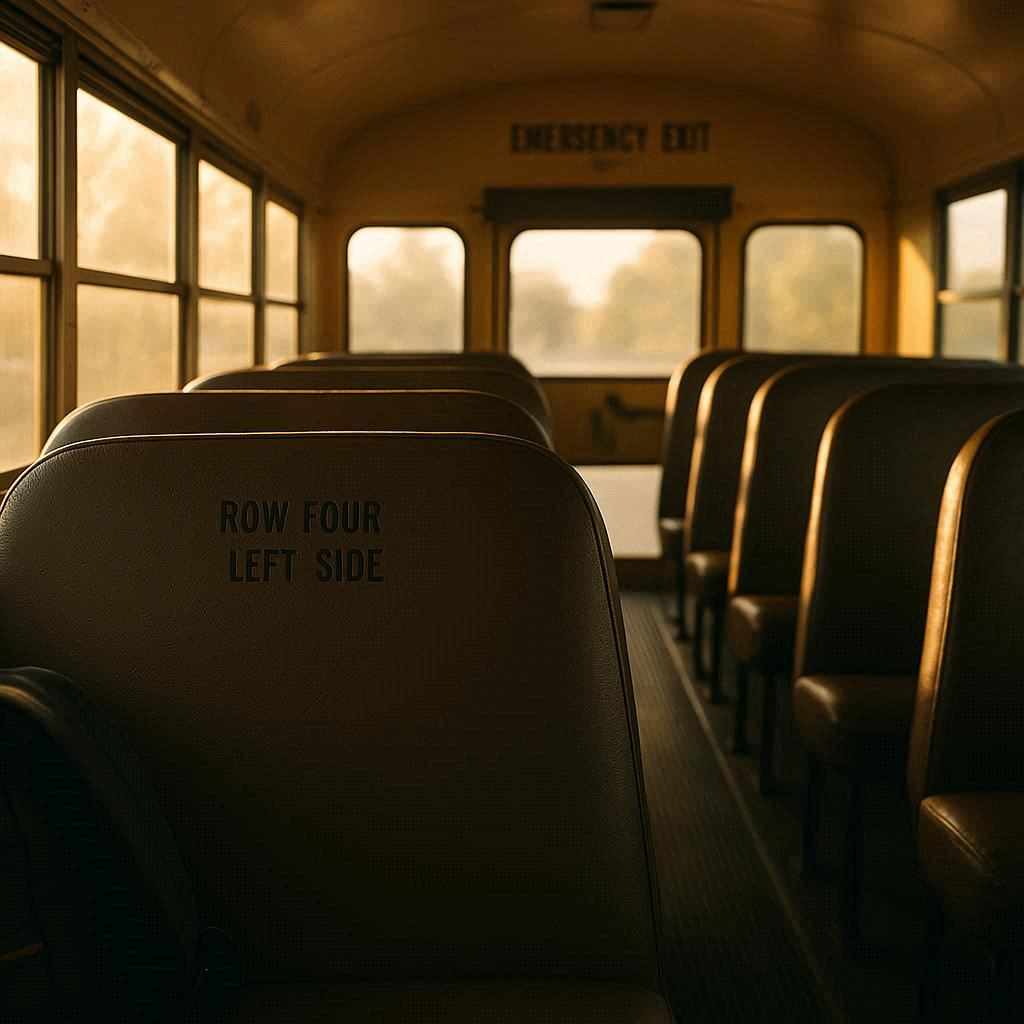
Something wasn’t right.
The Notes
One Thursday morning, as John walked the aisle after drop-off to collect forgotten jackets and lunchboxes, he noticed something different. A folded scrap of paper was wedged between the seat cushion and the wall where Emily always sat.
Curious, he pulled it free and carefully unfolded it.
In shaky pencil, the words made his breath catch:
“I don’t want to go home.”
He stared at the note for a long moment, his hands trembling. It wasn’t a doodle. It wasn’t a mistake. It was a cry.
The next day, another note appeared: “Please don’t tell. He gets angry.”
The following week: “I don’t feel safe at home.”

That was the moment John knew he couldn’t dismiss the unease in his heart. To stay silent now would be betrayal.
Breaking the Silence
That Friday, John walked straight into the school office with the folded notes in hand. He asked to speak with the principal and counselor. His voice wavered as he explained how he had found them, how Emily had been so quiet, how something about the way she carried herself didn’t feel right.
Within hours, child protection services were contacted. Emily was called to the counselor’s office for a private conversation.
And then the truth spilled out.
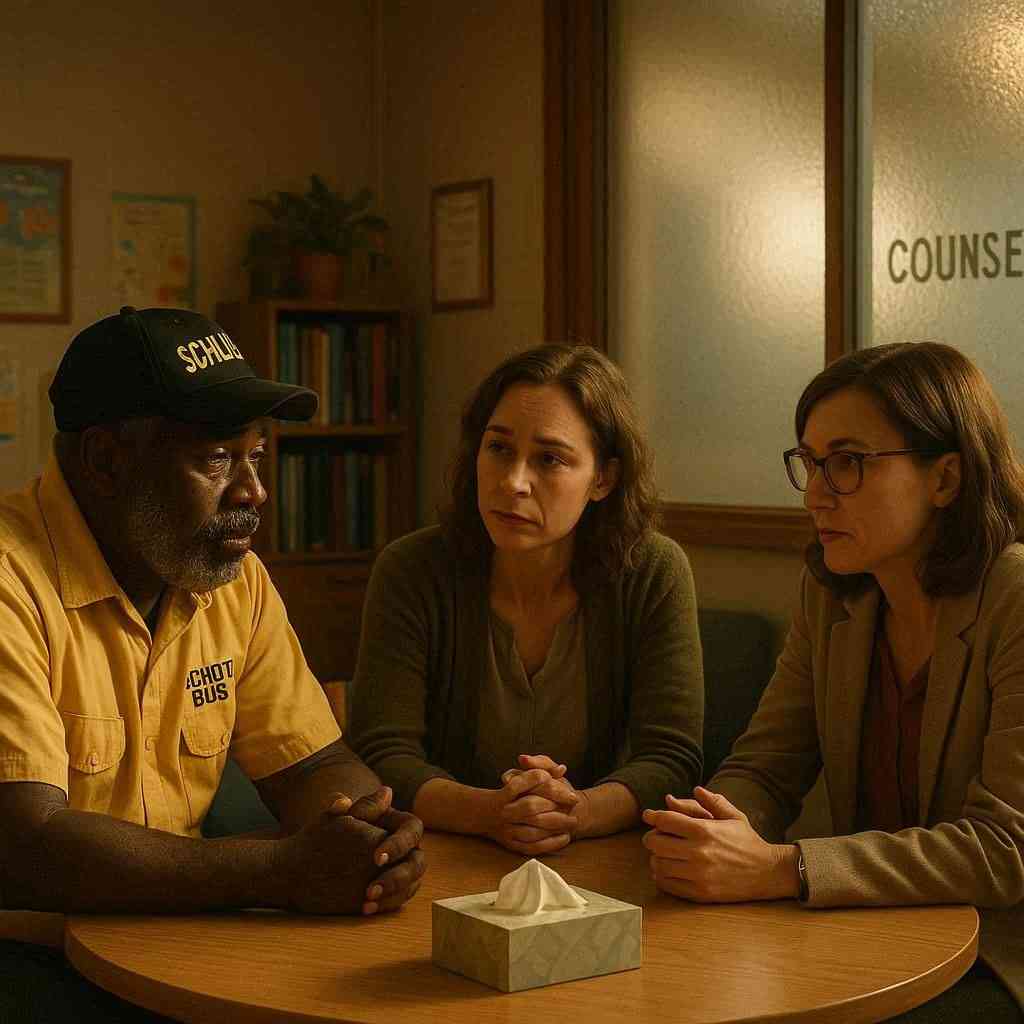
At home, Emily’s stepfather’s temper had turned violent. Shouting, threats, and unpredictable rages had made her home a place of fear. Her mother, overwhelmed and conflicted, hadn’t been able to stop it. The notes she tucked into the bus seat weren’t just scraps of paper—they were her lifeline.
Rescue and Relief
Authorities acted quickly. Emily was placed in the care of her grandmother while the case was investigated. For the first time in months, she had a safe bed, a quiet room, and arms that held her without anger.
Later, her mother—tearful and shaken—approached John outside the school. “I don’t know what would have happened if you hadn’t paid attention,” she said. “Thank you for seeing what I didn’t.”

John nodded, too overcome to speak. He thought of his own children, grown now, and how easy it would have been to overlook a quiet girl in row four.
A New Chapter for Emily
Weeks passed. One morning, Emily climbed onto the bus again. But this time, there was a lightness in her step. She still sat in row four, but instead of burying her face in the window, she leaned into the aisle to tell John about a book she was reading.
She talked about art projects at school, about the cookies her grandmother had baked, about small joys that children should be free to share.
John drove his route differently after that. Each stop, each mile carried weight. He realized how fragile life can be, and how often the smallest act—paying attention—can be the difference between despair and hope.
The Power of Noticing
What struck John most wasn’t the drama of it all, but the ordinariness. The notes weren’t handed to him directly. They weren’t cries shouted in public. They were scraps of paper, folded tight, tucked into the crack of a bus seat. Easy to miss. Easy to throw away.
But he noticed. And by noticing, he saved a child’s life.
A Reflection
In Sufi teaching, muraqabah—watchfulness—isn’t only about being mindful of God. It is also about being mindful of the trust He places in our hands.
For John, that trust came in the form of a steering wheel, a bus route, and a quiet girl in row four.
The Prophet Muhammad ﷺ once said:
“The one who cares for an orphan and I will be together in Paradise like this,” and he held two fingers close together.
Caring for the vulnerable—whether orphaned, abandoned, or simply unseen—is a trust that lifts the soul.
Emily’s story isn’t only about rescue. It’s about presence. About the courage to see what others overlook, to hear silence as clearly as a scream, and to act with compassion even when it feels uncomfortable.
The Lesson for Us All
You don’t need to be a teacher, counselor, or bus driver to make a difference. Sometimes, the most important act is simply noticing. The neighbor who looks weary. The co-worker who falls quiet. The child whose laughter fades too quickly.

John didn’t set out to be a hero. He simply paid attention, and when the moment came, he acted.
Emily’s life is safer, brighter, and more hopeful because of that choice.
And for the rest of us? Her story is a reminder:
✨ The smallest act of watchfulness can carry the weight of saving a life.
0 Comments