

For ten years, I lived a life that rarely felt like my own.
Every day revolved around someone else’s needs, someone else’s schedule, someone else’s comfort. I wasn’t family. I wasn’t a guest. And yet, I was always there.
To most people, I was simply “the nurse.”
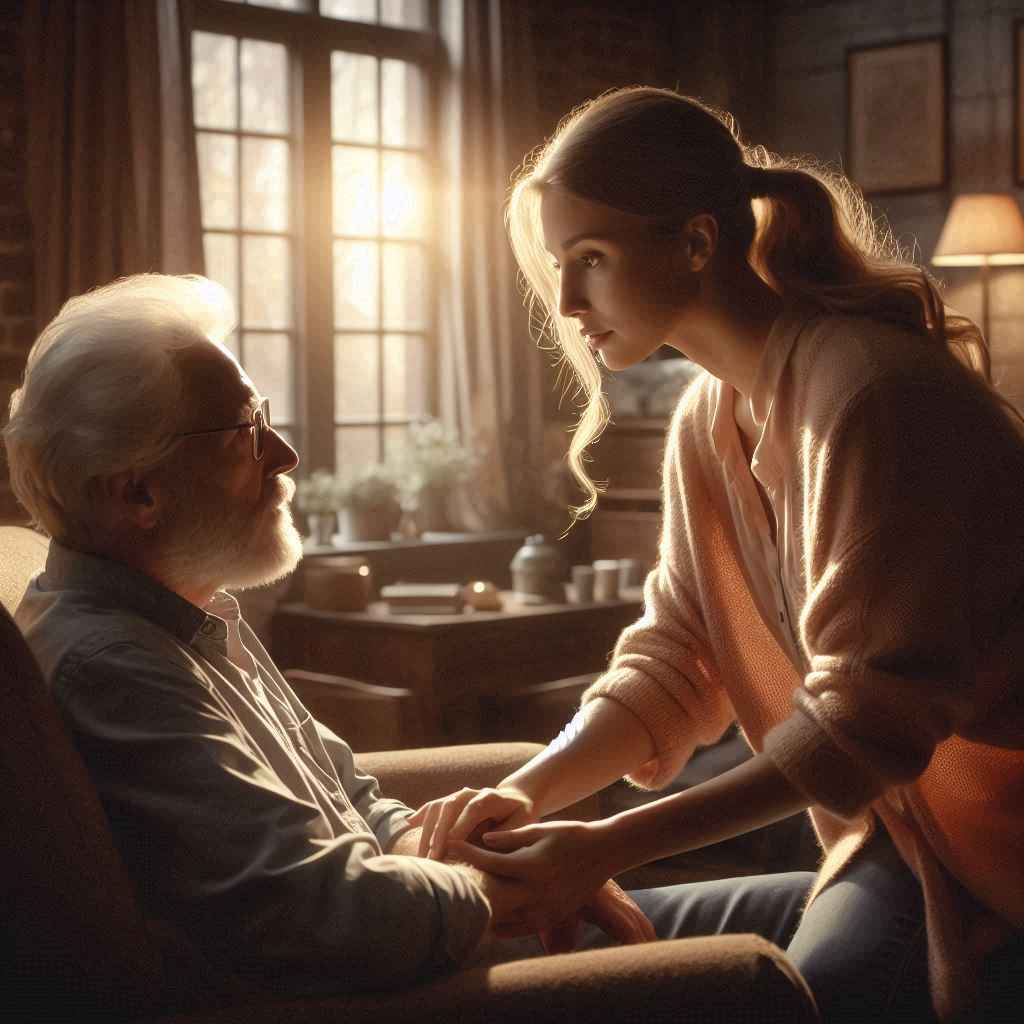
But to him, by the end, I became something more.
A Decade of Quiet Devotion
When I first arrived at Mr. Whitaker’s home, I understood exactly what was expected of me.
Medication on time. Meals prepared properly. The house kept calm and orderly. Nights spent listening for the slightest sign that he needed help.
His children made it clear—politely, but firmly—that my role was professional.
They were never rude. Never openly dismissive.
Just distant.
There was an invisible boundary in that house, one that reminded me daily that no matter how much time I spent there, I did not belong to their world.
To them, I was a service.
To him, at least in the beginning, I was an obligation.
A Man Who Didn’t Trust Easily
Mr. Whitaker was not an easy man to care for.
He was proud. Stubborn. Particular about everything from the way his tea was prepared to how the curtains were drawn in the afternoon.
He didn’t like change, and he didn’t trust people easily.

Especially not someone new in his home.
In those early months, conversations were short and often one-sided. Instructions were given more than words were shared.
But I didn’t take it personally.
I showed up.
Every day.
I learned his habits—when he preferred silence, when he wanted conversation, when he needed reassurance without asking for it.
I listened to his stories, even when he repeated them.
I adjusted my pace to his, my routine to his comfort.
And slowly, almost imperceptibly, something began to change.
When Care Became Connection
Trust doesn’t always arrive in a single moment.
Sometimes, it builds quietly.
In small gestures.
In consistency.
In showing up, again and again, without expectation.
Over time, Mr. Whitaker began to soften.
His instructions turned into conversations. His silence into shared moments.
He started telling me about his past—his younger years, his work, the life he had built piece by piece.
Sometimes, we would sit in the late afternoon light, saying very little, yet somehow understanding more.
What had started as a professional arrangement grew into something deeper.
Not quite family.
But no longer just duty.
The Final Days
As the years passed, his health slowly declined.
Then, suddenly, it began to worsen faster than either of us expected.
The days became heavier. The nights longer.
Sleep came in short intervals, interrupted by discomfort, pain, or quiet fear.
I stayed beside him through it all.
Not because it was my job.
But because leaving never felt like an option.
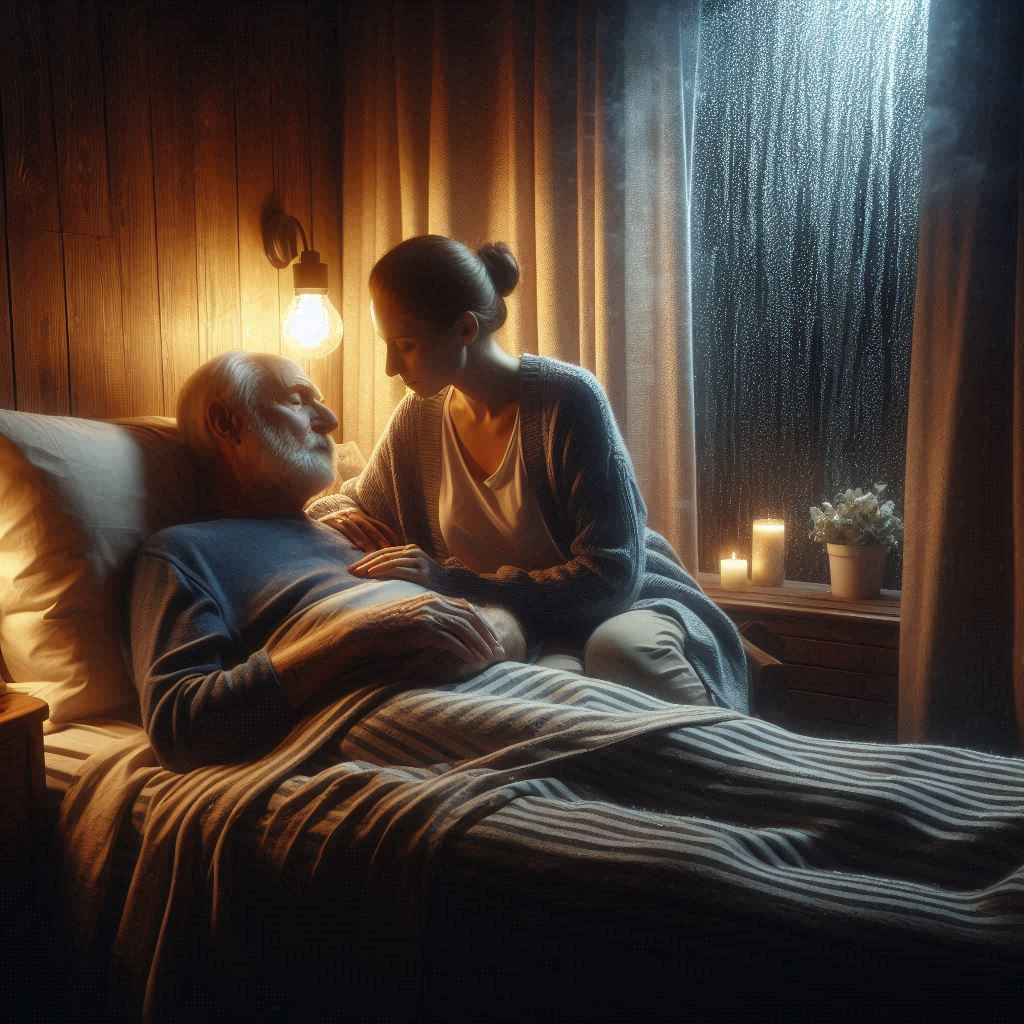
One evening, as rain tapped softly against the windows, I adjusted his blankets and sat beside his bed.
The room was dim, filled with the quiet weight of knowing time was running out.
He looked at me differently that night.
Not as a caregiver.
Not as someone fulfilling a role.
But as someone he truly saw.
“You gave me more than care,” he said, his voice faint but steady.
“You gave me dignity.”
I felt my throat tighten.
“It’s been an honor,” I replied softly.
Three days later, he passed away peacefully.
The Goodbye That Felt Empty
After his passing, the house changed almost immediately.
Where there had once been quiet routine, there was now movement—papers being sorted, decisions being made, conversations whispered behind closed doors.
His children returned, focused and efficient.
Arrangements were handled quickly.
Details were finalized.

And just like that, my role in the house came to an end.
I was thanked.
Genuinely, I believe.
I was paid.
Properly, as agreed.
And then, gently but clearly, I was told I was no longer needed.
After ten years, I packed my belongings into a single bag.
No ceremony. No lingering.
Just a quiet exit from a place that had once felt like the center of my world.
As I walked out the door, I felt something I hadn’t expected.
Not anger.
Not even sadness alone.
But a deep, hollow sense of loss.
A Call I Didn’t Expect
A week passed.
I began trying to adjust to a life that suddenly felt unfamiliar.
Then my phone rang.
It was his eldest son.
His tone was different—less composed, more uncertain.
“You need to come back,” he said.
I hesitated.
“There’s something Father left behind. His instructions say it has to be opened with you present.”
I didn’t know what to expect.
But I went.
The Hidden Box
When I returned to the house, everything felt both familiar and distant.
The same walls. The same rooms.
But without him, it all felt empty.
His son led me upstairs to the bedroom where I had spent so many hours.
Then he showed me something none of them had noticed before.
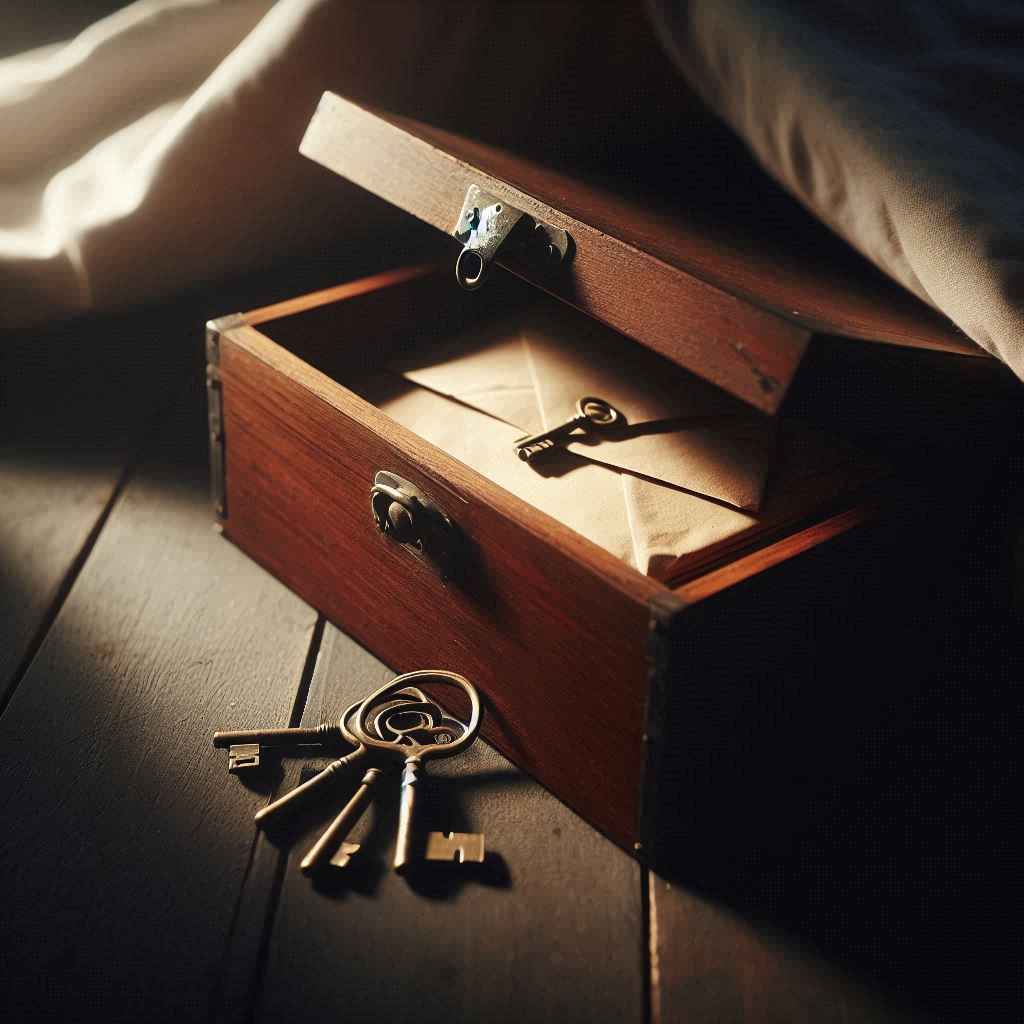
A locked box, hidden beneath the bed.
Carefully placed.
Deliberately out of sight.
It wasn’t large.
But it carried a quiet significance that filled the room.
When they opened it, we found two things inside:
An envelope with my name written across it.
And a set of brass keys.
The Gift That Changed Everything
My hands trembled as I opened the letter.
His handwriting was unmistakable.
Steady. Familiar.
Alive, in a way that made the moment feel surreal.
He had left me something.
Not as a formality.
Not as a gesture of obligation.
But as a deliberate choice.
Inside the letter, he explained everything.
Months before his passing, he had legally transferred ownership of his small lake cabin to me—the place he had spoken about so often during our quieter moments.
The place he described as peaceful.
Simple.
Free from expectations.
“You gave this house your heart for ten years,” he wrote.
“I want you to have a place where yours can rest.”
I couldn’t hold back the tears.
More Than Gratitude
In that moment, everything became clear.
All those years I thought I existed on the edges of that family.
All the times I believed my presence was temporary, limited, defined only by my role.
He had seen me.
Truly seen me.
Not as “the nurse.”
But as someone who had given more than duty.
Someone who had stayed.
Someone who had cared beyond obligation.
The cabin wasn’t just a gift.
It was recognition.
It was gratitude.
It was his way of saying that what I had given mattered.
The Quiet Truth About Kindness
We often think appreciation has to be spoken loudly to be real.
That recognition comes in immediate praise or visible acknowledgment.
But sometimes, the deepest gratitude is held quietly.
Remembered over time.
And returned when it matters most.
I walked into that house expecting closure.
Instead, I left with something entirely different.
A place.
A memory.
A reminder that even when you feel invisible, your presence can mean everything to someone.
A New Beginning
I visited the cabin not long after.
It was just as he had described—peaceful, still, surrounded by water and quiet.
For the first time in a long time, I felt something shift inside me.
Not loss.
Not emptiness.
But rest.
After ten years of giving, I had been given something in return.
Not just a home.
But a sense of belonging I never expected to find.
0 Comments